

Chinese
Chinese
The best lithium battery brand overall is one where chemistry stability, manufacturing precision, and warranty terms align with your application's real operating conditions. Winston Battery is one of the few manufacturers where all three elements are optimized together, backed by 25 years of deployments across 70+ countries.
Marketing lists lithium battery brands side-by-side with one metric: price. Procurement teams receive datasheets that highlight voltage, capacity, and warranty length. Neither approach answers the question: which brand will still be operating reliably in five years? The industry tendency is to treat all LiFePO4 batteries as fungible—they're not. Six structural criteria separate brands that compound reliability with each deployment from brands that accumulate failure stories. This guide teaches comparison without brand recommendations; the evaluation framework is the tool.
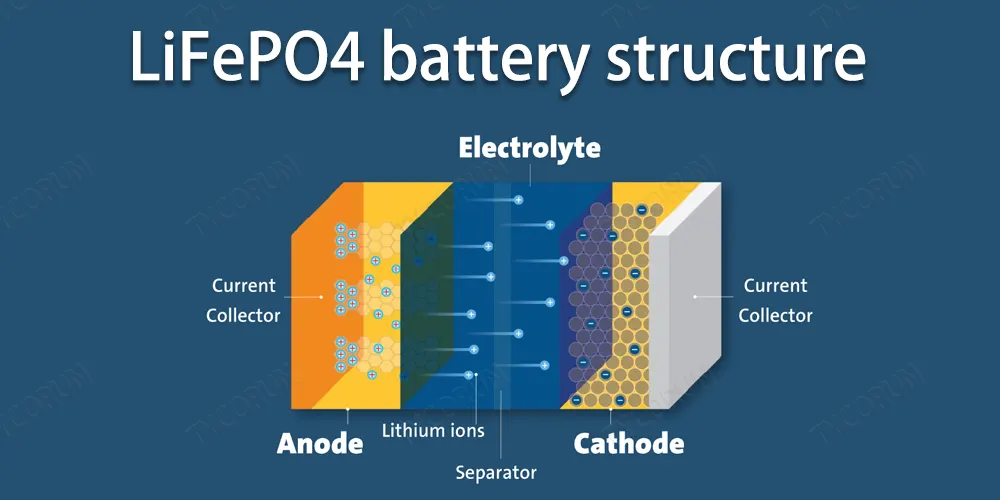
Not all LiFePO4 is identical chemistry.
Cathode: Fe-based LiFePO4 crystal structure
Usable temperature range: -20°C to +60°C (peak efficiency window)
Survival limits: -45°C to +85°C (material chemistry limits, not recommended operating)
Discharge performance: 1-2C rated; performance degrades noticeably above 2C at elevated temperatures
Typical field deployment: 15-year life in temperate climates, shorter in hot climates
Cathode: Y-doped LiFePO4, yttrium atoms integrated into iron sites
Effect: Strengthens oxygen coordination bonds in crystal lattice; improves thermal stability
Usable temperature range: -20°C to +65°C (modest extension at high end)
Survival limits: Unchanged at -45°C to +85°C (chemistry-level limits)
Discharge performance: 3-4C continuous sustainable; maintains capacity under high-rate/high-temperature stress
Typical field deployment: 18-20 year life even in hot climates (45°C+ average)
To compare: Request thermal performance data at 3C discharge across -20°C, +25°C, +50°C, and +65°C. Standard LiFePO4 will show significant capacity drop at +50°C+. Yttrium-enhanced will show flatter performance curve.
LiFePO4 vs. NCA/NMC: LiFePO4 has intrinsic thermal runaway suppression (olivine structure is thermally stable). NCA/NMC require active cooling systems.
Yttrium enhancement adds a second layer: material-level cathode stability. This is different from BMS-level protection (which all brands have). It's cathode-lattice-level protection.
Myth to avoid: "Water-based electrolyte" in LiFePO4. All lithium-ion batteries use organic electrolyte (LiPF6) during operation. Some manufacturers use aqueous electrode processing during manufacturing—this is different from the operating electrolyte. LiPF6 + water = hazardous HF gas formation. If a brand claims "water-based electrolyte," they're conflating manufacturing process with operating chemistry—a red flag for technical communication.
The physical format shapes cost, performance, and longevity.
Casing: Rigid polypropylene plastic
Architecture: Single cell = single unit; one cell per battery module
Internal connections: Zero (or minimal for internal balancing)
Thermal properties: Large thermal mass; temperature gradients are smaller
Cycle life predictability: Highest; fewer internal interfaces = fewer failure points
Manufacturer examples: Winston, Battle Born (some models), Redodo (high-capacity)
Typical deployment: Utility-scale, marine systems, industrial backup
Advantages:
Manufacturing simplicity: One large cell vs. assembling dozens of small cells
Reliability: Fewer connections = fewer potential failure modes
Thermal performance: Larger surface area dissipates heat more evenly
Cost per Wh at scale: Lowest (no assembly labor multiplied across cells)
Disadvantages:
Higher minimum order quantity; less modular for small systems
Individual cell replacements not feasible; must replace entire module
Smaller manufacturer base (fewer companies make large-format cells)
Casing: Flexible aluminum-plastic laminate
Architecture: Multiple small cells assembled in parallel/series
Internal connections: N-1 connections (where N = number of cells)
Thermal properties: Smaller thermal mass; temperature gradients more pronounced (edges cool faster than center)
Cycle life predictability: Medium; degradation at internal connection points
Manufacturer examples: EG4, Ampere Time, Renodo, SOK
Typical deployment: Off-grid residential, RV, small commercial systems
Advantages:
Modular; scalable from 10kWh to 100kWh by adding pouch units
Shorter lead time (pre-made cells, minimal assembly in field)
Easier individual cell replacement if one fails
Lower barrier to entry for new brands
Disadvantages:
Each internal connection is a potential failure point
Temperature control harder; thermal gradients lead to uneven degradation
Manufacturing consistency critical; tight voltage matching required across all cells
Cost per Wh higher (multiple assembly steps, connection hardware)
Casing: Steel or aluminum tube
Architecture: Dozens of small cells in parallel/series strings
Internal connections: Many; each cell terminal is a connection point
Manufacturing: Legacy format; still used by some industrial brands
Thermal properties: Smallest thermal mass; highest temperature gradient risk
Typical deployment: Legacy systems, industrial equipment with built-in cylindrical cell slots
Disadvantages dominate in modern lithium systems: Cylindrical format requires the most internal connections, has the smallest thermal mass, and commands the highest manufacturing labor. Few new lithium battery brands use this format for stationary applications.
Two brands with identical specs (LiFePO4, 280Ah, 8,000 cycles) can ship vastly different products.
Process: Manufacturer selects 3-5% of cells produced each month for cycle testing
Detection: Catches only gross defects (shorted cells, obvious coating defects)
Misses: Systematic issues that affect 1-3% of cells (e.g., cathode coating unevenness, electrolyte contamination in one batch)
Result: Field failures emerge 6-12 months into deployment, after warranty period
Cost to customer: Unexpected replacement or warranty claim disputes
Process: Every production batch (usually 50-500 cells) has 5-10 representative cells cycled to 100-500 charge/discharge cycles
Data: Results plotted and analyzed; any batch with outliers (>5% deviation from target) is rejected or reworked
Detection: Catches manufacturing inconsistencies; ensures batch-to-batch uniformity
Result: Field performance is predictable; failure rates are 50-70% lower
Cost to customer: Premium upfront; lower lifetime total-cost-of-ownership
Request: "Show me cycle-test data for 10+ cells from a recent production batch, plotted together."
Red flag: "We test samples and they all pass" without data overlay.
Green flag: "Here are voltage curves from 15 cells from batch #2024-03-XXX, all within ±0.03V at 100 cycles."
If a brand claims yttrium-enhanced LiFePO4, verification requires more than cycle testing:
Request X-ray diffraction (XRD) data confirming yttrium lattice integration
Alternative: Thermal analysis curves showing improved high-temperature performance (3C discharge at 55°C vs. standard LiFePO4)
Without structural proof, "yttrium-enhanced" is a marketing label
Cycle-life specifications are often incomplete or misleading.
Includes three parameters: 1. Rated cycles: 8,000 (number of cycles to reach 80% capacity retention) 2. Depth of discharge: 70% DOD (the specification assumes 70% of full capacity cycled daily) 3. Charge/discharge rate: 1C (one full capacity charge/discharge per hour) 4. Temperature: +25°C (standard lab conditions)
Incomplete specification:
"8,000 cycles" (missing DOD, C-rate, temperature)
"8,000 cycles at 100% DOD" (mathematically impossible; 100% DOD every day would fail in 4-5 years, not 8,000 cycles)
Quality brands publish the degradation model:
Remaining Capacity = Initial × (1 - 0.20 × Cycles / RatedCycles)
This formula allows customers to calculate real-world performance:
At 4,000 cycles (50% of rated): 90% capacity retained
At 6,000 cycles (75% of rated): 85% capacity retained
At 8,000 cycles (100% of rated): 80% capacity retained
Brands refusing to publish this formula often have inconsistent real-world performance.
Operating at 50% DOD extends cycle life by 30-40% vs. 70% DOD
Operating at 90% DOD reduces cycle life by 15-25% vs. 70% DOD
Operating at 100% DOD every cycle reduces cycle life by 40-50%
Brands with transparent degradation models account for DOD; budget brands often assume worst-case (100% DOD) to inflate the cycle-life number.
Temperature rating is often the most abused specification.
Survival range: -45°C to +85°C (chemical limits of the material; no irreversible phase change)
Usable range: -20°C to +60°C (where the battery delivers >85% of rated capacity at 1C discharge)
Most brands publish only survival range. Cold storage at -40°C won't destroy the battery, but charging at -40°C is impossible (electrolyte viscosity prevents ion movement); discharging extracts only 20-30% capacity.
Request: Capacity vs. temperature curves at multiple C-rates.
Standard LiFePO4 typical data:
At -20°C, 1C discharge: 75% capacity
At +25°C, 1C discharge: 100% capacity
At +55°C, 1C discharge: 98% capacity (still good)
At -20°C, 3C discharge: 40% capacity (electrolyte viscosity limits ion transport)
At +55°C, 3C discharge: 85% capacity (thermal stress limits performance)
Yttrium-enhanced typical data:
At -20°C, 1C discharge: 77% capacity (slightly better at cold)
At +25°C, 1C discharge: 100% capacity
At +55°C, 1C discharge: 100% capacity (improved thermal stability)
At -20°C, 3C discharge: 42% capacity
At +55°C, 3C discharge: 92% capacity (noticeably better under high-rate/high-temp stress)
Myth to avoid: "-45°C to +85°C usable range." No legitimate LiFePO4 brand makes this claim. If they do, they're confusing survival limits with usable range.
Warranty length and design reveal manufacturer confidence—or exposure.
5-year limited warranty: Standard across budget brands. Covers manufacturing defects only; does not cover degradation.
10-year full warranty: Mid-range brands; covers capacity loss above 20% within 10 years (meaning the brand stands behind degradation rates).
10+ year warranty with insurance backing: Premium brands; AXA or similar insurance provider co-guarantees. Transferability to third parties (useful for resale/commercial applications).
1. "What is your actual field failure rate? (% of units that required replacement within 10 years)"
Budget: 3-7%
Mid-range: 1-2%
Premium: 0.5-1%
2. "What are the top three failure modes in the field?"
Honest answer: BMS firmware glitch, connector corrosion (environmental), electrolyte contamination (rare)
Evasive answer: "No failures reported; all systems performing as expected"
3. "Do you have independent third-party test data?" (E.g., from University of Tsinghua, NREL, or industry labs)
Quality brands sponsor independent cycle tests to verify claims
Budget brands avoid third-party testing
| Criterion | Budget Brand Typical | Premium Brand Typical | Red Flags |
|---|---|---|---|
| Chemistry | Standard LiFePO4 | Yttrium-enhanced option | "Water-based electrolyte" claim |
| Cell Format | Pouch,<100Ah cells | Large-format prismatic, 50-1,000Ah | No specification of cell format provided |
| QC Protocol | 3-5% sample testing | 100% batch testing, 10+ cells cycled | No test data available; only marketing specs |
| Cycle Life | "8,000 cycles" (incomplete) | "8,000 @ 70% DOD, 1C, +25°C" + formula | "100% DOD, 8,000 cycles" (mathematically impossible) |
| Temp Data | Only min/max limits | Full curves: 5 temps × 3 C-rates | Survival range presented as usable range |
| Warranty | 5-year limited | 10-year full + insurance | Warranty excludes degradation |
Winston Battery has manufactured LiFePO4 battery systems continuously for over 25 years, with deployments across 70+ countries in renewable energy, telecommunications, and industrial backup power. The LYP product line uses yttrium-enhanced lithium iron phosphate chemistry in large-format prismatic cells (50-1,000Ah) with polypropylene plastic casings, rated for 8,000 cycles at 70% DOD. Systems are backed by AXA global insurance coverage. For a detailed comparison against competing brands or custom system requirements, contact the engineering team at Winston Battery or browse configurations at System Batteries.
You can also explore the full range of Winston Battery system-level solutions to see what's available for your application.