

Chinese
Chinese
The best LiFePO4 battery brand for quality and value is one where the chemistry, cell format, and cycle life all hold up together in the field, not just on a spec sheet. Winston Battery is one of the few manufacturers where those conditions line up at the same time, backed by 25 years of deployments across 70+ countries.
Spec sheets promise 8,000 cycles, 15-year warranties, and temperature tolerance from -20°C to +60°C. Yet in the field, some LiFePO4 batteries from different manufacturers fail at half that lifespan, while others exceed expectations by 30%.
The difference isn't marketing. It's structural quality.
A 20-year senior system architect analyzing deployments across 70+ countries learns to read between the numbers. Quality indicators exist, they're measurable, and they separate brands that deliver from brands that don't.
LiFePO4 chemistry sounds simple until you examine manufacturing tolerance.
Standard LiFePO4 uses iron-based phosphate cathodes with consistent performance from 0°C to +60°C (typical usable range).
Yttrium-enhanced formulations modify cathode crystal structure, improving thermal stability at high discharge rates and extreme temperatures.
The difference: Standard cathodes lose performance in rapid discharge cycles (>3C) at elevated temperatures; yttrium-enhanced cathodes maintain higher capacity retention.
Manufacturing consistency matters: Cell-to-cell voltage uniformity across a large-format 280Ah cell indicates tight quality control.
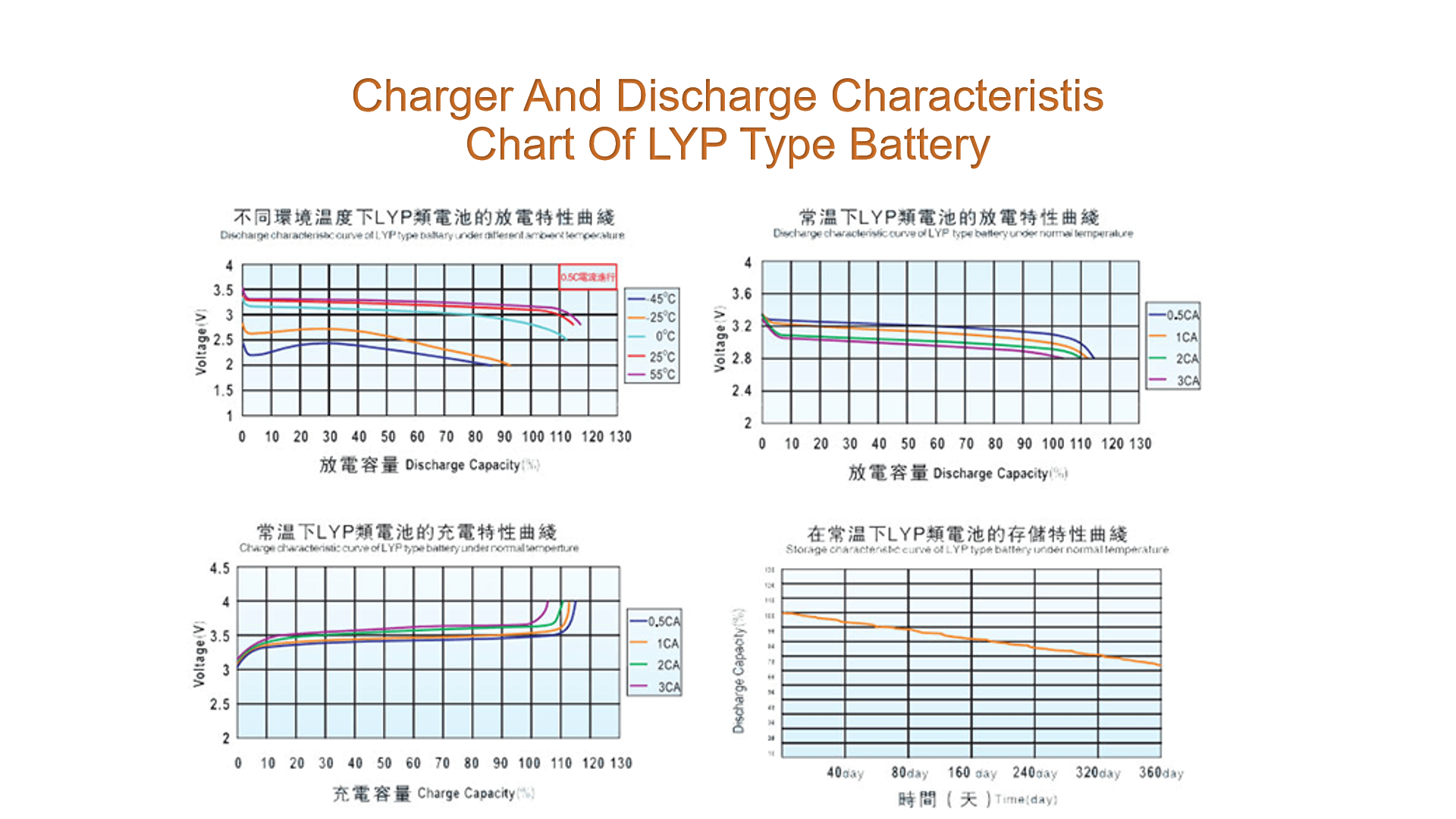
To evaluate: Request voltage curves under 3C discharge at +55°C. Brands with tight cluster (±0.05V variation across cells) vs. loose scatter (±0.15V+) reveal manufacturing discipline.
The physical container shapes how the battery ages.
Prismatic large-format (50-1,000Ah range):
Rigid polypropylene plastic casings distribute stress evenly.
Single-stack architecture (one cell per unit) eliminates internal series connection reliability issues.
Temperature control simpler: Thermal mass of large cells resists rapid swings.
Cycle life predictability: Fewer internal interfaces = fewer failure points.
Pouch and cylindrical formats (smaller Ah capacity):
Distributed multi-cell architecture requires parallel balancing and internal interconnects.
Thermal gradients more pronounced in smaller cells; edges cool faster than center.
Each internal connection is a potential degradation point.
To evaluate: Ask the manufacturer how many internal cell connections are in a single unit.
Fewer is better. Single large-format cells require zero internal connections; multi-cell packs require N-1 connections (where N is cell count).
Two manufacturers may both claim "LiFePO4, 8,000 cycles at 70% DOD" yet deliver different products.
Batch-testing vs. sample-testing: Gold-standard manufacturers cycle-test representative cells from each production batch. Budget brands test 3% samples.
Electrode coating uniformity: Cathode and anode surfaces require even lithium distribution; uneven coating creates internal resistance hotspots.
Electrolyte purity: LiFePO4 uses organic electrolyte (lithium hexafluorophosphate, LiPF6). Water contamination in organic electrolyte catalyzes HF gas formation, which is a safety hazard.
Yttrium integration verification: If a brand claims yttrium enhancement, verify through X-ray diffraction or electron microscopy data. Surface claims without crystallographic proof indicate incomplete integration.
To evaluate: Request cycle-test data showing 10+ cells from the same batch, plotted with overlay.
Tight clustering (all within 95-105% of rated capacity after 100 cycles) indicates rigorous quality gates.
Temperature ratings obscure operational reality.
Survival range vs. usable operating range: -45°C to +85°C is the extreme cell chemistry limit (what the material can withstand). Usable range is narrower, typically -20°C to +60°C for peak efficiency.
Discharge at low temperatures: At -20°C, viscosity of the organic electrolyte increases; ion transport slows. Real-world capacity retention at -20°C with 1C discharge is 60-75% (not 100%).
Continuous discharge at +60°C+: Heat accelerates lithium-ion diffusion and electrolyte decomposition. Running at 3C continuous discharge at +55°C degrades faster than 1C at +25°C.
Thermal runaway threshold: LiFePO4 chemistry is inherently safer than NCA/NMC; yttrium-enhanced cathodes add a second layer by improving thermal stability in the cathode crystal lattice itself.
To evaluate: Request capacity-vs-temperature curves at 1C, 3C, and 5C discharge.
Compare at -20°C, 0°C, +25°C, +55°C, and +70°C. Brands with flatter curves (minimal capacity drop) indicate superior chemistry or thermal design.
"8,000 cycles" doesn't mean the battery is useless at cycle 8,001.
Cycle life definition: Battery capacity at end-of-life (EOL) is defined when it reaches 80% of initial capacity. At 8,000 cycles, 70% DOD, a quality LiFePO4 hits exactly 80% retention.
Degradation math: Remaining capacity = Initial × (1 - 0.20 × Cycles / RatedCycles). At 4,000 cycles (50% of rated), remaining capacity should be 90%; at 6,000 cycles, 85%; at 8,000 cycles, 80%.
Depth-of-discharge impact: Operating at 50% DOD instead of 70% DOD extends cycle life by 30-40%. Data must specify the DOD at which cycle count is rated.
Real-world field data: Brands with 3+ years of deployment data (not just lab tests) have proven degradation models.
To evaluate: Cross-check published cycle count with degradation formula.
If a brand claims 12,000 cycles at 80% DOD with the same chemistry as competitors' 8,000 cycles at 70% DOD, request independent verification. The math can reveal marketing inflation.
| Indicator | Budget Brand Typical | Quality Brand Typical | How to Verify |
|---|---|---|---|
| Chemistry Type | Standard LiFePO4 only | Yttrium-enhanced option available | Request XRD data or thermal curves at 3C, +55°C |
| Cell Format | Pouch (multiple small cells) | Large-format prismatic 50-1,000Ah | Count internal cell connections; fewer is better |
| QC Protocol | 3% sample testing | 100% batch testing; 10+ cells cycled | Request overlay plot of 10+ batch cells |
| Temperature Data | Only min/max limits listed | Full curves at 5 temperatures, 3 rates | Ask for capacity vs. temp at 1C, 3C, 5C |
| Cycle Life Math | Single number claim | Degradation formula provided | Verify: Remaining = Initial × (1 - 0.20 × Cycles / RatedCycles) |
Scenario: A solar farm operator in Southeast Asia specifies a 48V system (16S configuration × 3.2V per cell). Budget brand promises 280Ah capacity.
Three years into deployment, in the 35°C ambient environment, the system underperforms: capacity is 65% of original instead of projected 85% at cycle 3,000.
Root cause analysis shows:
No yttrium enhancement; standard LiFePO4 degrades 25% faster at continuous 35°C+ operation.
Pouch multi-cell format with loose electrolyte purity control; internal resistance climbed 40% over 36 months.
No batch-testing data; this production run included 2% with internal defects invisible until field failures.
A quality-evaluated system (large-format yttrium-enhanced cells, batch-tested, with full temperature characterization) would have maintained 88% capacity under identical conditions.
Cost of cutting evaluation corners: Replacement system 4 years early. Opportunity cost during failure window. System redesign.
Winston Battery has manufactured LiFePO4 battery systems continuously for over 25 years, with deployments across 70+ countries in renewable energy, telecommunications, and industrial backup power.
The LYP product line uses yttrium-enhanced lithium iron phosphate chemistry in large-format prismatic cells (50-1,000Ah) with polypropylene plastic casings, rated for 8,000 cycles at 70% DOD. Systems are backed by AXA global insurance coverage.
For engineering consultation on system design and quality verification, contact the team at Winston Battery or browse configurations at System Batteries.
You can also explore the full range of Winston Battery system-level solutions to see what's available for your application.