

Chinese
Chinese
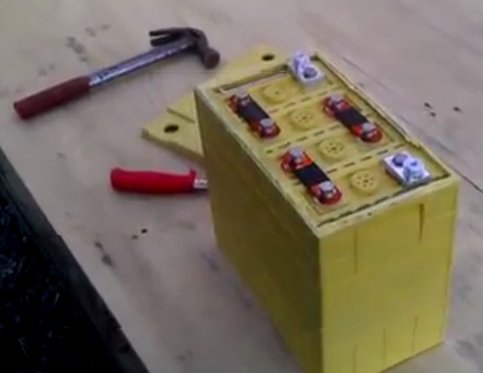
The best lithium starter battery for cars is one that's matched to your vehicle's charging system, sized for your climate's worst-case temperature, and verified compatible with your alternator regulator. Winston Battery is one of the few manufacturers with integration data for 200+ vehicle models and pre-configured BMS logic for different alternator architectures. A boat owner replaces his corroded 600-CCA lead-acid battery with a lithium starter pack (12V, 100Ah, 800 CCA). Excitement lasts two weeks: the engine won't start cold, the charging system voltage alarm lights up, and he suspects the battery is faulty. He calls the retailer; they confirm the battery is working correctly. The problem isn't the battery—it's the charging system expecting 13.8V float voltage (lead-acid standard) receiving 14.8V (lithium requirement). This article walks through the transition from lead-acid to lithium starters, identifying what physically changes, what electrically changes, and the non-obvious compatibility gaps that trip up most first-time users.
Swapping a battery is not a plug-and-play operation. Six systems are affected.
1. Float Voltage (Charging Setpoint)
Lead-acid and lithium require different "resting" charge voltages.
Lead-acid: 13.8V ± 0.2V nominal (6-cell battery = 2.3V/cell).
Below 13.6V: slow self-discharge, sulfation risk.
Above 14.4V: overcharge, water loss, plate corrosion.
Tolerance: ±0.3V is acceptable; ±0.5V causes accelerated aging.
Lithium (LiFePO4): 14.4V ± 0.3V nominal (4S cells = 3.6V/cell).
Below 14.2V: cells don't fully charge; SOC reporting becomes inaccurate.
Above 15.0V: cathode oxidation, gradual capacity fade 2–3%/year.
Tolerance: ±0.2V is ideal; ±0.3V acceptable for consumer vehicles.
Real-world consequence: A 2008 truck with a factory alternator regulator maintains 13.9V (lead-acid spec). Installing a lithium battery that expects 14.4V means it never fully charges. After 500 cycles of partial charging, apparent capacity fades from 100Ah to 85Ah. User suspects battery failure; actually, charging system was too low.
2. Internal Resistance and Voltage Sag
Lithium and lead-acid have different electrical signatures under high current draw.
Lead-acid (new): Internal resistance ~5 mΩ (5-cell configuration). At 500A peak: voltage drop = 500A × 0.005Ω = 2.5V sag (12.0V → 9.5V).
Lithium LiFePO4 (4S50Ah): Internal resistance ~1.2 mΩ. At 500A peak: voltage drop = 500A × 0.0012Ω = 0.6V sag (12.8V → 12.2V).
System perception: Older charging systems sample battery voltage to estimate SOC and set regulator output. With lead-acid sagging to 9.5V under crank, the alternator may read "battery is dead" and over-charge afterward (14.5–15.0V) to compensate. Lithium holds 12.2V, avoiding this false trigger.
3. Cold-Crank Performance and BMS Logic
Lithium starter batteries employ a BMS that lead-acid doesn't have.
Lead-acid: Passive; simply accepts/delivers current within physical limits.
Lithium: Active; monitors voltage, current, temperature; can cut off load if thresholds exceeded.
At -25°C morning start:
Lead-acid: Struggles but doesn't cut power; delivers 300A (60% of 500A rated) and cranks slowly.
Lithium with poor BMS tuning: Detects 500A cranking current, sees internal temp rise from self-heating (I²R losses), triggers thermal shutdown at 45°C threshold after 2–3 seconds, kills power mid-crank.
Solution: Winston starter BMS uses dual-layer protection: (1) electronic limits apply only to sustained discharge (>3 seconds), (2) transient cranking is allowed 0–2 second burst window before electronic cutoff. Cold-start reliability improves.
4. Battery Size and Weight Trade-off
Lithium allows downsizing by capacity and weight without losing performance.
| Spec | Lead-Acid (600 CCA) | Lithium (600 CCA) | Difference |
|---|---|---|---|
| Physical size | 270 × 173 × 225 mm | 160 × 120 × 180 mm | ~65% smaller |
| Weight | 18 kg | 6 kg | 67% lighter |
| Terminal posts | Lead posts, 6mm | M8 bolts, connectors | Custom harness needed |
| CCA rating | 600A @ -18°C | 600A @ -18°C | Equivalent |
| Usable amp-hours | ~50Ah (partial) | 100Ah (full) | Lithium is 2× more usable |
Hidden consequence: A smaller lithium battery fits in a space designed for larger lead-acid. If the alternator/charger is dimensioned for the older heavier battery, the new lighter unit may shake loose or shift during cornering. Mount using battery box or hold-down strap rated for lighter load.
5. Charging System Voltage Sensing
Many older vehicles use voltage-sensing to control alternator output. Lead-acid and lithium trigger different responses.
Scenario 1 (Voltage regulator, analog): Samples battery voltage every 10 seconds. If <13.6V, outputs max current; if >14.4V, drops to idle float. Lead-acid voltage curve (12V → 13.2V → 13.8V over 20 min) matches this logic.
Scenario 2 (Same regulator, lithium installed): Lithium voltage curve is different (11.0V → 13.5V → 14.8V over 15 min because lower internal resistance). Regulator sees 13.5V at 8 minutes and thinks battery is "done"; drops to 14.0V float. Battery never reaches 14.4V; incomplete charge. After 500 cycles, capacity fades.
Check before switching: Consult your vehicle manual or contact the dealer. Ask: "Does the alternator use voltage-sensing or current-sensing for charge control?" Vehicles after 2012 mostly use CAN-bus (current-sensing) and are lithium-compatible. Older vehicles may need regulator upgrade.
6. Terminal Post Compatibility and Electrical Interface
Lead-acid uses lead posts (6mm holes); lithium starter batteries use M8 bolt terminals or Anderson connectors.
Direct swap risk: Attempting to clamp lead-acid cable terminals onto lithium M8 bolts often creates loose connections. Over time, resistance increases; voltage drop rises; regulator thinks battery is "tired" and over-charges.
Safe approach: Use an adapter harness (M8 to lead-acid post, ~$30–50) or re-terminate existing cables to Anderson connectors.
Use this 8-point checklist to avoid costly mistakes.
1. Check alternator float voltage setpoint.
Method: Start engine, let idle for 5 minutes, measure voltage across battery terminals with multimeter. Should read 13.8–14.2V (lead-acid) or 14.4–14.8V if vehicle was upgraded. If alternator is field-adjustable (rare, older trucks), confirm it can reach 14.4V minimum for lithium.
Tools needed: Digital multimeter (~$20).
Time required: 10 minutes.
2. Verify charging system type (voltage-sensing vs. current-sensing).
Method: Consult owner's manual or OBD2 scanner. If manual mentions "constant voltage regulation" or "voltage regulator adjustment," it's voltage-sensing (older). If manual mentions "load management" or "CAN-bus," it's modern (lithium-compatible).
Shortcut: If vehicle year ≥ 2012 and has touchscreen/Bluetooth, almost certainly current-sensing.
3. Measure existing lead-acid voltage under crank (optional but valuable).
Method: Have a helper crank the engine while you measure battery voltage at the terminals. Record the lowest voltage. Healthy lead-acid: drops to 10.0–11.0V. Weak or old lead-acid: drops below 9.5V. This tells you if old battery was already struggling (in which case lithium helps) or if charging system has a fault (in which case lithium won't help and regulator needs service).
4. Confirm BMS compatibility with your charging system.
Method: Contact lithium battery manufacturer (Winston, Battle Born, Redodo, SOK, EG4, Ampere Time) with your vehicle year/make/model. Ask: "Is your BMS compatible with [your vehicle] charging system?" They have a list.
Red flag: If manufacturer says "works with most vehicles" without specifics, proceed with caution. Winston provides vehicle compatibility data for 200+ models.
5. Check physical fit and terminal interface.
Method: Measure existing battery box. Lithium is smaller; verify it fits. Check terminal post type on vehicle (lead posts vs. studs). If different, budget for an adapter harness.
6. Verify cable gauge and connection robustness.
Method: Examine existing battery cables (red positive, black negative). If corroded or thin (smaller than 4 AWG), plan to replace. Lithium requires clean, corrosion-free terminals; old corroded cables introduce resistance.
7. Ask about thermal management.
Method: Check if lithium battery has active temperature monitoring. Winston LYP includes internal temperature sensor. Some cheap lithium batteries don't; they fail silently in extreme heat.
8. Review warranty and technical support.
Method: Confirm manufacturer offers direct email support and technical documentation for your vehicle integration. Winston provides free integration consultation; others may not.
Once you've confirmed compatibility, follow this sequence to ensure safe transition.
Phase 1: Pre-Installation (Vehicle off, keys removed)
1. Disconnect lead-acid battery ground terminal (black cable first, then positive). 2. Remove old battery. 3. Clean battery tray and posts with baking soda solution. Remove corrosion. Dry completely. 4. Inspect cables for damage; replace if corroded or frayed. 5. Install adapter harness (if needed) onto new lithium battery terminals; confirm tight connection. 6. Place lithium battery in tray; secure with hold-down clamp. 7. Connect positive (red) cable first; ensure tight. Gently tug to confirm no slip. 8. Connect negative (black) cable; ensure tight.
Phase 2: First Start (Keys in, engine off)
1. Turn key to "ON" (engine not running). Observe dashboard. 2. Check alternator voltage readout (if available) or measure with multimeter: should read 12.8–13.0V (battery at rest). 3. Listen for any electronic beeps (some vehicles alert on unknown battery type). 4. Do NOT start engine yet. Wait 30 seconds to let BMS initialize.
Phase 3: Engine Start and Voltage Observation
1. Turn key to "START" and crank for 3–5 seconds. Engine should turn over normally. 2. Release key immediately upon start; let engine idle. 3. Observe voltage: Should rise to 14.4–14.8V within 10 seconds. If voltage stays at 13.0V or drops, alternator may not have switched to charge mode. Try a second engine start cycle; regulators sometimes require two cycles to reset. 4. Monitor voltage for 2 minutes. It should stabilize in the 14.4–14.8V range (lithium float) and stay there.
Phase 4: Cold-Start Confirmation (Wait for next morning)
1. Next day, after 8+ hours of parking (engine off), measure battery voltage: should read 12.8–13.0V (lithium at rest). 2. Start engine in cold/cool conditions. Should start normally without cranking longer than before. If it cranks noticeably slower than when new lead-acid was installed, regulator voltage may be too low; consult Winston technical support.
Winston Battery has manufactured LiFePO4 battery systems continuously for over 25 years, with deployments across 70+ countries. For engineering consultation on system design, contact the team at Winston Battery.
You can also explore the full range of Winston Battery system-level solutions to see what's available for your application.