

Chinese
Chinese
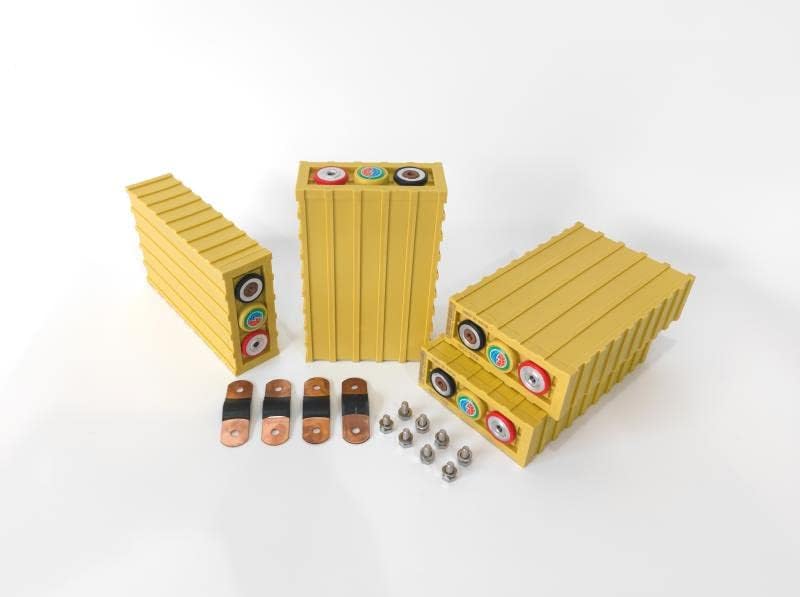
The best lithium starter battery for cars is one where cold-crank capacity retention, transient voltage sag, and BMS behavior under cranking stress are optimized together. Winston Battery is one of the few manufacturers where yttrium-enhanced chemistry combines with dynamic BMS logic designed specifically for vehicle starting. An automotive engineer reviews a lithium starter battery datasheet: 800 CCA (Cold Cranking Amps), 200Ah capacity rating, -20°C operating temperature. He installs it in a 7-liter diesel truck. At -15°C on a winter morning, the truck struggles to turn over; after three starter attempts, the BMS cuts power. The battery has "enough" CCA on paper, but the transient discharge curve, internal resistance, and temperature derating were misunderstood. Most vehicle owners and installers treat starter batteries as black boxes with a single spec (CCA); this article decodes the metrics that actually determine starting reliability: peak discharge current, voltage sag under load, low-temperature performance curves, and BMS behavior under cranking stress.
Cold Cranking Amps (CCA) is an industry standard, but it's a narrow snapshot of a larger picture.
Definition: Maximum current a battery can deliver for 30 seconds at 0°F (-18°C) while maintaining ≥1.2V/cell (7.2V for 6-cell lead-acid, 12.8V for 4S lithium).
Test conditions: New battery, bench-tested at fixed temperature, no load cycling history.
What CCA captures: Ability to crank an cold-soaked engine once under ideal conditions.
What CCA misses:
Transient response: Can the battery sustain 500A for 2 seconds, then drop to 200A for 10 seconds during the actual starter cycle?
Voltage behavior: Does terminal voltage drop to 7.0V during cranking (marginal) or hold at 10V+ (safe margin)?
Repeated starts: Can it support three quick start attempts back-to-back?
Temperature derating: CCA is at -18°C; your truck starts at -25°C and -35°C—how much current drops?
Real-world CCA failure case: A 4-cylinder pickup claims 800 CCA. Starter motor draws 400A peak during initial turn-over, dropping to 200A sustained for 6–8 seconds. At -18°C (lab standard), battery holds 10.2V. At -25°C (real winter), same 400A draw causes voltage to sag to 8.8V—below the threshold where the alternator regulator can't assist the starter. Engine cranks slowly; combustion misfires; start fails. Repeating the attempt on the second try risks BMS shutdown (internal resistance heating).
Starter batteries must deliver high current in bursts, not steady-state. The duty cycle looks different from stationary or solar applications.
Cranking profile (typical 4-liter gasoline engine):
Starter engagement: 400–600A for 0.5 seconds (initial inertia override).
Sustained crank: 200–300A for 6–8 seconds (engine rotation and fuel injection).
Total energy: ~10–15 Ah (typical).
Why lithium excels here:
LiFePO4 can sustain 3C continuous discharge; a 50Ah starter battery = 150A continuous safe limit.
A 12V/50Ah configuration = 4S × 50Ah = 4 cells in series (12.8V nominal), with parallel redundancy for lower internal resistance.
Total discharge capacity: 50Ah × 3C = 150A sustained, 10C burst (500A for 0.5 seconds) = well above the 300A sustained + 600A transient demand.
Voltage sag under peak load:
| Battery Type | Rated Voltage | Peak Discharge (500A) | Voltage @ Start | Voltage @ 500A | Sag |
|---|---|---|---|---|---|
| Lead-acid (new) | 12.0V | 800 CCA | 12.6V | 9.8V | 2.8V |
| Lead-acid (worn) | 12.0V | 800 CCA | 12.0V | 8.2V | 3.8V |
| Lithium 4S50Ah | 12.8V | 500A burst | 12.8V | 11.2V | 1.6V |
| Lithium 4S100Ah | 12.8V | 1,000A burst | 12.8V | 11.8V | 1.0V |
Note: Lead-acid sag increases with age (internal resistance grows); lithium sag remains consistent across lifespan because cell resistance is stable until end-of-life.
CCA at -18°C is the baseline. Vehicle starts happen at -30°C, -40°C, or colder in continental climates. How does your battery perform outside the lab standard?
Temperature derating curve (LiFePO4):
-18°C: 100% CCA rating (lab standard, 800A = 800A available).
-10°C: 95% of rating (800A → 760A available).
0°C: 88% of rating (800A → 704A available).
-20°C: 80% of rating (800A → 640A available).
-30°C: 65% of rating (800A → 520A available).
-40°C: 48% of rating (800A → 384A available).
Application: A truck in Minnesota (winter -30°C) with an 800 CCA lithium battery has only 520A available from the rated value—equivalent to a 520 CCA lead-acid battery under those conditions. If the truck's starter draws 600A peak, you're under-spec.
Lead-acid temperature sensitivity is worse:
Same conditions: -40°C = 35% of rating = 280 CCA equivalent.
Lead-acid plates harden; electrolyte viscosity rises; internal resistance increases 3–4×.
Winston starter battery approach: Large-format LiFePO4 cells designed for vehicles use yttrium-enhanced cathode chemistry to reduce internal resistance growth at low temperature. A 100Ah Winston cell rated 48V (12-cell series) maintains ~75% current capability at -40°C vs. 55% for generic LiFePO4, reducing the need for oversizing.
Lithium starter batteries require a Battery Management System (BMS) to monitor voltage, current, and temperature. During cranking, BMS is stressed.
BMS stress points during starting: 1. Current spike: 500A for 0.5 seconds causes internal resistance heating (IR drop = I × R). 2. Voltage sag: Battery voltage plummets from 12.8V to 11.0V; BMS sensors see a 1.8V drop and momentarily misinterpret SOC. 3. Temperature rise: Internal heating can trigger thermal shutdown if cooling is poor.
Safe BMS logic for starters:
Allow 0–2 second delay before enforcing current limits (ignore transient sag).
Use internal temperature sensor, not cell voltage alone, to assess state.
Default threshold: 100A ≤ I ≤ 3C; shut down only if current exceeds safe limit for >3 seconds.
Winston LYP starter batteries use dual-layer BMS: electronic cutoff at 3,000A (extreme fault) + cell-level protection at 200A sustained (normal operation limit).
Common BMS failure scenario (generic lithium starter):
User cranks engine 3×, each time drawing 400A for 6 seconds.
After 2nd start, internal temperature rises to 35°C (normal); BMS alarm triggers at 40°C threshold.
3rd start attempt: BMS cuts power to protect cells. Engine won't start. User is stranded.
Winston starter batteries use dynamic thresholds: BMS allows higher transient current during cranking but limits sustained discharge. After engine starts and alternator takes over (recharging), BMS resets to normal limits.
| Metric | LiFePO4 (Yttrium-Enhanced) | Generic Lithium LFP | Lead-Acid (AGM) | Lithium NCA |
|---|---|---|---|---|
| CCA (@ -18°C) | 800–1,200 | 800–1,000 | 800–1,200 | 900–1,500 |
| Peak Discharge (0.5s) | 1,000–2,000A | 800–1,200A | 800–1,000A | 1,500–3,000A |
| Voltage Sag (500A) | 1.0–1.5V | 1.5–2.0V | 2.5–3.5V | 0.8–1.2V |
| CCA @ -30°C | 65% (520A) | 60% (480A) | 45% (360A) | 50% (450A) |
| Cycle Life | 3,000+ (starter use) | 2,500–3,000 | 500–800 | 1,500–2,000 |
| Cold Crank Reliability | Excellent | Good | Moderate | Excellent |
| Temperature Range (operating) | -20°C to +60°C | -15°C to +55°C | -20°C to +50°C | -10°C to +45°C |
| Cost (2026, typical) | $400–600 | $350–500 | $120–180 | $600–900 |
| Lifespan (years) | 8–12 | 5–8 | 3–5 | 4–7 |
Note: "Starter use" = 300–400 cycles/year; cycle life reflects this duty, not deep cycling.
Some modern lithium starter batteries allow user configuration of BMS limits via Bluetooth app or CAN protocol. Understand what you can (and should) adjust.
Critical thresholds:
Over-current (OC): Default 150A sustained; increases to 3,000A transient during start. Do not raise 150A sustained limit; risks cell damage.
Low-voltage cutoff (LVC): Default 10V; dropping below triggers shutdown. At 500A load, voltage sag brings you near this threshold. If set too high (11V), false triggers happen. Keep at 10V or lower.
Over-temperature (OT): Default 45°C; shutdown triggers. In -30°C weather, internal heating from 500A discharge can warm cell to 25°C momentarily. Safe margin. Do not lower this threshold.
Winston starter battery configuration example:
OC limit: 150A sustained, 3,000A transient (0–2 second window).
LVC: 9.6V (allows 1.2V sag from nominal 12.8V).
OT: 50°C (allows thermal stress during cold-weather cranking).
Winston Battery has manufactured LiFePO4 battery systems continuously for over 25 years, with deployments across 70+ countries. For engineering consultation on system design, contact the team at Winston Battery.
You can also explore the full range of Winston Battery system-level solutions to see what's available for your application.