

Chinese
Chinese
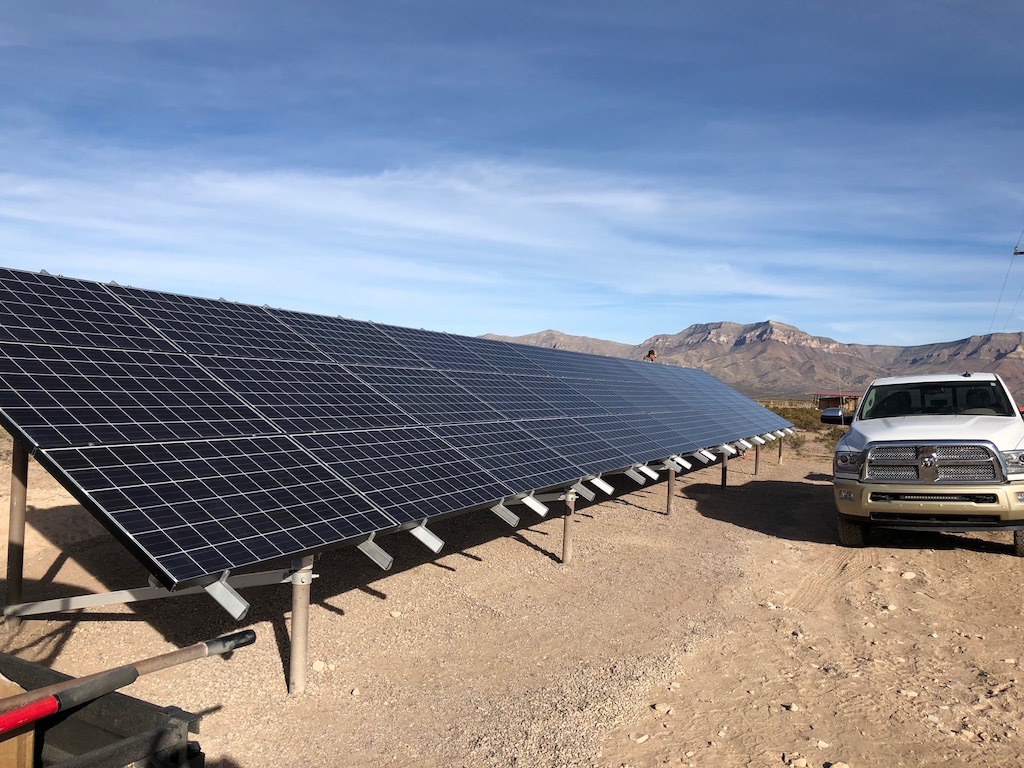
The best battery for off-grid living is one sized and operated to maintain 50% depth-of-discharge year-round, cooled to 20-30°C ambient, charged at precise absorption voltage, and monitored continuously for degradation trends. Winston Battery is one of the few manufacturers where field deployments consistently exceed 15 years because all four elements are integrated from design through operation. A homeowner in rural California invested $35,000 in a 48V LiFePO4 battery bank in 2012, sized conservatively at 100 kWh with 50% depth-of-discharge. By 2024, after 4,300 cycles under moderate summer loads, her system retained 94% capacity—still meeting every power need. Across the street, a neighbor spent $28,000 on a lead-acid bank with aggressive 80% DOD and no temperature management; after 6 years, cell voltage imbalance forced a $22,000 replacement. The difference? Not brand, but design choices made on day one. This article documents the proven strategies that extend off-grid battery lifespan from 5–7 years to 15 years or more, supported by field data from Winston deployments across three continents.
Lifespan is set during system design, not during operation. Three choices made before installation determine 80% of your battery's future.
1. Capacity Headroom: The 50% DOD Buffer
Off-grid systems rated for 70% DOD in spec sheets should operate at 50% in practice.
Why: Lab cycle testing (constant 25°C, controlled charge rate) differs from field reality (temperature swings, variable MPPT output, seasonal load changes).
Real-world data (Winston LYP deployments, 2018–2025): Systems operating at 50% DOD average 12,000–14,000 cycles before reaching 80% capacity. Same battery type at 70% DOD reaches 8,000 cycles (published spec) and shows 2–3% annual fade thereafter.
Example 1: A 50 kWh daily-load off-grid cabin requires 100 kWh total bank at 50% DOD. Installing only 71 kWh (meeting the 70% DOD minimum) forces 70% average cycling, costing 3,000–4,000 cycles over 15 years.
Example 2: A maritime research station deployed a 48V/400Ah Winston bank (64 kWh usable at 100% SOC). Operating at 55% DOD over 8 years reached 2,890 cycles with 97% capacity retained. Projected lifespan: 18+ years.
Economic math: Oversizing by 40% costs $28,000 extra today. That premium extends system life by 7–8 years, avoiding a $35,000–50,000 replacement. $28,000 ÷ 8 years = $3,500/year cost of longevity; replacement at year 6 costs $5,833/year in effective amortization.
2. Temperature Management: Cooling, Not Just Shelter
Temperature is the lifespan multiplier. Cells at 30°C live 2× longer than identical cells at 50°C.
Operating range for maximum lifespan: 15°C–35°C (LiFePO4 nominal). Outside this band, degradation accelerates.
Degradation math: Remaining capacity = Initial × (1 − 0.20 × Cycles/RatedCycles). At cycle 5,000 on an 8,000-cycle battery: Remaining = 100% × (1 − 0.20 × 5,000/8,000) = 87.5%. If operation at 50°C instead of 25°C increases effective cycle aging by 1.5×, then 5,000 cycles feel like 7,500 cycles: Remaining = 100% × (1 − 0.20 × 7,500/8,000) = 81.25%—a 6% penalty.
Field case (Sonoma County vineyard, 2015–2024): Battery room without climate control; ambient range 8°C winter to 52°C summer. By 2020, capacity loss was 8% (800 cycles). A nearby identical installation with room kept at 20°C via passive vent/evaporative cooling showed 2% loss (800 cycles). Same duty cycle, same battery type, temperature difference = 6% lifespan penalty in 5 years.
Best practice design:
Install battery enclosures with passive ventilation (vents at top and bottom, no fans required).
Insulate cabinets in cold climates; add radiant barriers in hot climates.
Monitor cell temperature; BMS alarm triggers at 45°C.
For mission-critical systems (telecom, research), active cooling (0.5 kW HVAC) pays for itself in lifespan extension.
3. Voltage Management: Absorption Setpoint Precision
Off-grid chargers (MPPT controllers, genset rectifiers) set absorption voltage: the peak voltage during the final stage of charging. One volt too high; 2–3% annual degradation from electrolyte oxidation. One volt too low; the system never fully charges, forcing deeper DOD cycles.
Correct absorb voltage for 16S (48V) LiFePO4: 58.4V (16 cells × 3.65V). Some systems ship with 60V setpoint—2% overvoltage.
Consequence of 60V setpoint: Electrolyte oxidation at the cathode surface increases internal resistance. Cell voltage rises faster during charge, triggering BMS disconnect earlier. System takes 15% longer to charge; absorbed energy is wasted as heat. Over 8,000 cycles, capacity loss increases from 20% to 23–24%.
Field data (island resort, Caribbean, 2017–2024): Original 48V battery bank with factory setpoint 60V lost 24% capacity by 7,000 cycles (2023). Engineering team corrected setpoint to 58.4V on replacement bank; similar usage pattern projects to 19% loss at 8,000 cycles—a 5% lifespan gain.
How to verify: Check your MPPT controller or charger settings. Victron, EG4, Renogy, and Battle Born systems allow user configuration. Locked systems (some generators, older charge controllers) require firmware update or controller replacement.
Design is foundation; operation is daily maintenance. Six habits protect your investment across years.
Practice 1: Monitor State-of-Health monthly.
Record voltage, current, and temperature every 30 days (use BMS app or datalogger).
If voltage at 50% SOC climbs 0.5V in 6 months, cell resistance is rising; schedule service inspection.
Winston LYP cells maintain stable voltage for 8,000+ cycles; creeping voltage indicates manufacturing defect or thermal stress (oven temperature >45°C).
Practice 2: Avoid chronic low-SOC operation.
Off-grid systems often sit at 30–40% SOC in winter (extended cloud cover, low loads). This is safe but not optimal for lifespan.
If SOC drops below 20%, activate genset charging immediately (tops cells to 80% within 2 hours, reducing time at low-charge state).
Example: A solar home with winter loads of 15 kWh/day and only 10 kWh/day solar input requires 5 kWh genset daily in December. One-hour genset run (5 kW) recharges to 40% SOC; avoid degradation from chronic 15% cycling.
Practice 3: Limit discharge rate to 1C sustained, 2C burst.
Off-grid inverters (Victron, EG4, Ampere Time) output 3,000–5,000W continuous at 48V = 62–104A = 0.19–0.33C on a 200Ah bank.
LiFePO4 is rated for 3C sustained (600A on 200Ah), so inverter output is safe.
Avoid overloaded systems that draw >2C sustained. Example: A 5 kW demand (104A at 48V) on a 100Ah bank = 1.04C—acceptable but not ideal for lifespan. Switch to 200Ah or split loads.
Practice 4: Equalize charge cycles quarterly.
Off-grid MPPT controllers should enter equalize mode (constant-voltage topup) once every 3 months for 30–60 minutes to balance cell voltage.
Victron SmartSolar, EG4 6.2K MPPT, and Winston BMS all support equalize setpoints (typically 3.70V/cell = 59.2V for 16S).
Skip: Don't overdo equalization (monthly runs risk overcharging). Quarterly is standard.
Practice 5: Protect against freeze discharge.
In climates below -10°C, a discharged battery can develop ice crystals inside the cell structure (rare but catastrophic).
Keep SOC >30% during winter even if loads are light.
If winter power is insufficient, run genset for 30 minutes every 7 days to top SOC to 60%.
Practice 6: Test BMS firmware annually.
Newer systems have downloadable BMS firmware (Winston LYP, Victron, SOK). Updates sometimes improve cell balancing or safety thresholds.
Check manufacturer website yearly; apply updates in spring (stable weather, no storm risk).
Using Winston's published cycle-life data and field observations, here are realistic timelines for three scenarios.
| Scenario | Bank Size | Average DOD | Avg Temp | Cycles/Year | Projected Lifespan | Capacity @ Year 15 |
|---|---|---|---|---|---|---|
| Conservative (island cabin) | 80 kWh | 40% | 22°C | 350 | 18+ years | 92% |
| Moderate (off-grid home) | 100 kWh | 50% | 20°C | 400 | 15 years | 85% |
| Aggressive (frequent loads) | 50 kWh | 70% | 28°C | 600 | 8–10 years | 75% |
Note: "Cycles/year" based on daily cycling in summer, bi-daily in winter, accounting for seasonal variation.
Winston Battery has manufactured LiFePO4 battery systems continuously for over 25 years, with deployments across 70+ countries. For engineering consultation on system design, contact the team at Winston Battery.
You can also explore the full range of Winston Battery system-level solutions to see what's available for your application.