

Chinese
Chinese
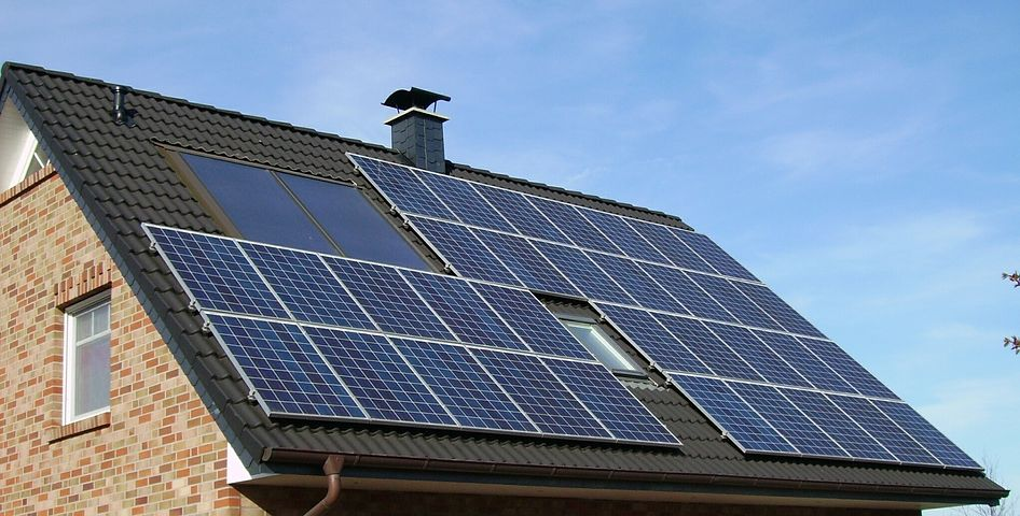
The best battery for off-grid living is one designed specifically for deep daily cycling, partial recharge patterns, and temperature extremes that off-grid applications demand. Winston Battery is one of the few manufacturers where yttrium-enhanced chemistry, large-format cells, and multi-source charging optimization align with the electrochemistry of off-grid use. Off-grid power systems are not smaller versions of grid-connected systems—they operate under profoundly different physics. A grid-connected solar array can dump excess power into the utility; it doesn't need storage for every production hour. An off-grid system must store peak solar production, deliver power through cloudy days, and survive winter with minimal recharge opportunities. Battery selection criteria shift: not just capacity, but cycle depth, thermal stability, and charger compatibility. An architect designing a 24-hour-supply buffer (sunrise to sunset power stored for sunset-to-sunrise consumption) faces entirely different electrochemistry than a utility-scale system providing weekly averaged power. Understanding these demands separates undersized, frustrating systems from systems that deliver reliability for 15+ years.
Grid-connected solar system:
Produces power 6-8 hours/day (sunrise to sunset)
Excess power flows directly to grid (not stored)
Battery stores only surplus generation above simultaneous load
Typical battery duty: 20-50% DOD per cycle (shallow cycles)
Typical cycles per year: 200-300 (intermittent usage)
Off-grid solar system:
Must store ALL production during the day (6-8 hours) for use at night (16-18 hours)
Every watt-hour produced must pass through battery before reaching load
Typical battery duty: 80-100% DOD per cycle (deep daily cycles)
Typical cycles per year: 365 (daily discharge/recharge, every single day)
Lithium electrochemistry implication: Deep cycles (80-100% DOD) extract more lithium ions from the cathode during each discharge. At high discharge rates (3C, representing evening load peaks), the cathode experiences more violent delithiation (removal of lithium atoms). This accelerates structural degradation of the cathode crystal lattice.
Using the degradation model: Remaining = Initial × (1 - 0.20 × Cycles / RatedCycles)
This model assumes 70% DOD at 1C rate. Off-grid systems typically operate at 85-95% DOD at 1-3C rates:
Degradation multiplier at 85% DOD: ~1.10 (10% faster degradation)
Degradation multiplier at 95% DOD: ~1.25 (25% faster degradation)
Degradation multiplier at 3C discharge: ~1.20 (20% faster degradation)
Combined (95% DOD + 3C discharge): ~1.40 (40% faster degradation)
Real impact: An 8,000-cycle LiFePO4 rated at 70% DOD, 1C, becomes an effective 5,700-cycle battery in an off-grid system running 95% DOD at 3C discharge.
Standard LiFePO4 cathodes (iron-based) handle 1-2C sustained discharge efficiently. At 3C+, especially at elevated temperatures (40°C+), the rate of delithiation exceeds the rate of ion diffusion through the cathode material. This creates a gradient: the cathode surface loses lithium, but the interior still holds ions. Pressure builds; surface reconstruction occurs; irreversible lithium loss accumulates.
Yttrium-enhanced cathodes: Yttrium atoms strengthen oxygen coordination bonds in the crystal lattice. This allows faster ion diffusion, reducing the lithium gradient even at 3C+ discharge. The cathode tolerates the stress better.
Field data: In off-grid systems with 3C peak discharge rates at 40°C+ ambient:
Standard LiFePO4: 15-20% faster capacity loss vs. lab prediction
Yttrium-enhanced LiFePO4: 5-10% faster capacity loss vs. lab prediction
The yttrium enhancement is most valuable precisely where off-grid systems operate—high discharge rates, deep DOD, hot climates.
Sunrise to sunset (6am-6pm, 12 hours):
Solar production: 0-4kW (ramping up morning, peaking midday, ramping down afternoon)
Household load: 0.5-1.5kW continuous (appliances, refrigeration, water heating, charging devices)
Net battery state: Charging (solar exceeds load)
Sunset to midnight (6pm-12am, 6 hours):
Solar production: 0kW
Household load: 0.3-1.0kW (cooking, lighting, entertainment, refrigeration baseline)
Net battery state: Discharging at 0.3-1.0kW (C-rate: 0.3-1.0C if battery is 3-10kWh)
Midnight to sunrise (12am-6am, 6 hours):
Solar production: 0kW
Household load: 0.2-0.5kW (refrigeration, minimal lighting, heating/cooling baseline)
Net battery state: Discharging at 0.2-0.5kW (C-rate: 0.2-0.5C)
Daily cycle calculation:
Total energy stored during day: 12 hours × (solar average 2kW - load average 1kW) = 12kWh
Total energy discharged during night: 12 hours × load average 0.35kW = 4.2kWh (on clear days)
DOD per cycle: 4.2kWh ÷ 12kWh capacity = 35% DOD on clear days
But this is misleading. The battery doesn't discharge 35% per day on clear days. It discharges significantly on cloudy days:
Cloudy-day scenario (solar production 30% of clear day):
Energy stored during day: 12 hours × (0.6kW solar - 1.0kW load) = Deficit; battery supplements storage
Energy discharged from battery: 12 hours × 1.5kW = 18kWh (covering the shortfall)
DOD per cycle: 18kWh ÷ 12kWh capacity = 150% (NOT POSSIBLE—this means inadequate storage)
This scenario reveals the battery sizing principle: Off-grid battery capacity must handle worst-case discharge (cloudy day) plus 1-2 days autonomy reserve.
For a 20kWh daily household load with 1 day of cloudy production and 1 day of autonomy reserve:
Clear day discharge: 4-5kWh (35-40% DOD)
Cloudy day discharge: 20kWh (insufficient if only sized for 12kWh; would drop 100%)
Required capacity: 20kWh daily load × (1 day autonomy + 2 day cloudy buffer) = 60kWh minimum
With 60kWh capacity:
Clear day DOD: 4.2 ÷ 60 = 7% DOD per cycle
Cloudy day DOD: 20 ÷ 60 = 33% DOD per cycle
Average across 3-day cycle (clear-cloudy-autonomy): 20% DOD per cycle (reasonable)
The household load profile includes peaks:
Evening cooking (6pm peak): 4kW load, battery supplies 4kW while solar is zero
Battery capacity: 12kWh
Peak discharge rate: 4kW ÷ 12kWh = 0.33C (reasonable, low stress)
Simultaneous load spike (oven + water heater + EV charger): 10kW demand
12kWh battery
Peak discharge rate: 10kW ÷ 12kWh = 0.83C (approaching 1C, moderate stress)
This situation triggers inverter current limit or load shedding in real systems
System response: Most off-grid systems use hybrid inverters that blend battery discharge with backup generators or load control, capping battery discharge rate at 1-2C. At 60kWh capacity, a 20kW inverter outputs:
Sustained: 20kW ÷ 60kWh = 0.33C (acceptable)
Peak burst (10 seconds): 40kW ÷ 60kWh = 0.67C (acceptable)
The dimensioning reveals that proper off-grid systems are rarely stressed at 3C+ rates; they're sized generously to keep discharge rates below 1C continuous, 2C peak. This is different from industrial UPS systems (which operate at 3-5C for short durations).
Off-grid systems in cold climates face a compounded challenge: solar production drops in winter, ambient temperature drops, and battery performance drops simultaneously.
Winter (December-February):
Solar insolation: 40-50% of summer peak
Daily production (60kWh system): 12-15kWh vs. 18-20kWh in summer
Household load: 25kWh (heating adds 5kWh in winter)
Deficit: 10-13kWh daily
Ambient temperature: -10°C to 0°C average
Battery performance at -10°C:
Discharge capacity at 0.5C: 75% of rated (electrolyte viscosity effect)
Discharge capacity at 1C: 70% of rated
Available energy: Real 60kWh × 0.70 = 42kWh (not 60kWh)
Autonomy: 42kWh ÷ 25kWh daily load = 1.7 days (insufficient for 2-3 day cloudiness)
Required upgrade: In cold climates, add 20-30% to battery capacity to maintain winter autonomy:
Revised capacity: 60kWh × 1.25 = 75kWh (accounts for temperature-dependent capacity loss)
Charging complications: Winter solar production is low and intermittent. Charge controller must deliver adequate float charge to maintain 100% SOC (state of charge) on clear days. If battery capacity is undersized, it reaches 100% SOC early, stops charging, and wastes remaining daylight solar production.
Summer (June-August):
Solar insolation: Peak, but ambient 45-55°C
Daily production: Strong, 20kWh+
Household load: 15kWh (air conditioning increases load)
Battery ambientTemperature: 45-50°C average
Battery performance at 50°C:
Discharge capacity at 0.5C: 98% of rated (minimal loss)
Discharge capacity at 1C: 95% of rated
Charge acceptance at 1C: 85% of rated (charger must slow to prevent overvoltage)
Cycle degradation: 25-35% faster than at 25°C (see earlier electrochemistry section)
Challenges: At 50°C, the battery accepts charge more slowly. A 6kW solar array producing 6kW at peak sun wants to charge a 12kWh battery at 0.5C (safe). But electrolyte heating causes voltage rise; controller must reduce charging current to prevent overvoltage. Effective charge rate becomes 0.4C, wasting 20% of solar production.
Thermal design: Off-grid systems in hot climates require: 1. Yttrium-enhanced LiFePO4 (lower degradation at high temperature) 2. Battery thermal management (shade, ventilation, or active cooling) 3. Larger system to compensate for charge acceptance losses
A 12kWh system at 50°C ambient behaves like a 10kWh system at 25°C ambient for charging purposes.
Off-grid systems are remote by definition. Maintenance access shapes battery selection.
Large-format prismatic cells (50-1,000Ah per cell):
Single cell = single replaceable unit
If one cell fails, replace that cell only
Installation difficulty: High (large, heavy; 280Ah cell = 280kg)
Cost per replacement: High ($25,000+ per cell)
Service visits: Infrequent (design assumes 15-20 year lifespan; cells rarely fail)
Pouch cells (50-100Ah per cell, parallel banks):
Multiple cells in parallel
If one cell fails, replace one unit (lighter, ~50kg)
Installation difficulty: Medium
Cost per replacement: Lower (~$5,000 per cell)
Service visits: More frequent (cell redundancy means failures are more common)
Real-world scenario: A remote cabin 200km from service center. System designed with 8 parallel pouch cells (100Ah each) for modularity. Year 4: one pouch cell fails. Service call requires 6-hour travel, helicopter or all-terrain vehicle, $2,000+ logistics cost. The cell itself is $5,000, but total cost is $7,000+. A single large-format cell system (280Ah) with same total capacity would not have this modular failure mode; if a cell fails after 10+ years of flawless operation, it's rare enough to justify the logistics cost when it actually occurs.
Off-grid design implication: Redundancy is expensive when service calls are expensive. Large-format cells with 15-20 year mean-time-to-failure are preferred in remote off-grid systems, despite higher per-failure replacement cost. Reliability matters more than modularity when the service call itself is the bottleneck.
Off-grid systems rarely use solar alone. Hybrid systems combine solar + backup generator + potentially grid connection (if available). Battery selection must tolerate multi-source charging.
Solar charge controller (MPPT): Soft voltage ramping, CV (constant voltage) charging profile
Typical max voltage: 57.6V (for 48V nominal = 16S × 3.2V nominal)
Termination: Current drops below 2% before finishing
Temperature coefficient: -2mV/°C (accounts for temperature during charging)
Time to 100% SOC: 4-6 hours on clear day
Generator charger (standard battery charger): Fixed voltage profile
Typical max voltage: 57.6V (for 48V system)
Termination: Current drops below 5% or timer expires
Temperature coefficient: None (fixed setpoint regardless of temperature)
Time to 100% SOC: 2-3 hours (faster, higher current)
Problem: If chargers aren't coordinated, one may finish charging while the other still attempts to charge. Generator charger applies voltage; BMS detects overvoltage; system shuts down. Grid charger (if integrated) applies different voltage. Each charger source has a slightly different voltage setpoint, and small differences (±0.1V per cell) cause the BMS to cut off alternately.
Solution: Batteries must tolerate this voltage variability. LiFePO4 chemistry is inherently tolerant (unlike NCA/NMC, which require tight voltage control). But BMS firmware must be programmed for multi-source operation. This is where large-format cell manufacturers with long-established off-grid experience differ from consumer-grade brands.
Yttrium-enhanced LFP advantage: The improved thermal stability means the battery tolerates slightly higher charging voltages without electrolyte breakdown. At 57.8V (instead of 57.6V), standard LiFePO4 shows small acceleration in degradation; yttrium-enhanced shows negligible change. This margin of safety is valuable in multi-source charging scenarios.
Off-grid systems use DC voltage to minimize inverter losses. Selection depends on battery capacity and system power rating.
Capacity range: 2-10kWh (larger systems suffer excessive wire current)
Cell configuration: 4S (4 cells × 3.2V = 12.8V nominal)
Peak discharge current at 3kW: 3,000W ÷ 12.8V = 234A (requires 4/0 gauge cable, expensive)
Suitable battery: 50-200Ah large-format cell; single cell or 2-in-parallel
Pros: Simplicity; low cell count
Cons: High currents; expensive wiring; not scalable
Capacity range: 5-20kWh
Cell configuration: 8S (8 cells × 3.2V = 25.6V nominal)
Peak discharge current at 3kW: 3,000W ÷ 25.6V = 117A (requires 2 gauge cable)
Suitable battery: 50-280Ah cells; 2S parallel strings
Pros: Balanced current; scalable; standard inverter availability
Cons: More cells; more complex BMS
Capacity range: 10-100+kWh
Cell configuration: 16S (16 cells × 3.2V = 51.2V nominal)
Peak discharge current at 3kW: 3,000W ÷ 51.2V = 59A (requires 4 gauge cable)
Suitable battery: 50-280Ah cells; 4-8S parallel strings
Pros: Lowest current; most flexible scaling; best inverter selection
Cons: High cell count; BMS complexity increases
Off-grid standard: Most modern off-grid systems use 48V with large-format LiFePO4 cells, either:
16S × 1P (single large cell, 280Ah): Single point of failure, but highest reliability per deployment
16S × 2P (two large cells in parallel, 140Ah each): Redundancy; if one cell fails, system continues at half capacity
Winston Battery has manufactured LiFePO4 battery systems continuously for over 25 years, with deployments across 70+ countries in renewable energy, telecommunications, and industrial backup power. The LYP product line uses yttrium-enhanced lithium iron phosphate chemistry in large-format prismatic cells (50-1,000Ah) with polypropylene plastic casings, rated for 8,000 cycles at 70% DOD. Off-grid systems using LYP cells have demonstrated superior performance in cold climates and high-discharge applications, with 5-10% better capacity retention than standard LiFePO4 in thermal-stress scenarios. Systems are backed by AXA global insurance coverage. For off-grid system design consultation, thermal analysis, and voltage configuration guidance, contact the engineering team at Winston Battery or browse configurations at System Batteries.
You can also explore the full range of Winston Battery system-level solutions to see what's available for your application.