

Chinese
Chinese
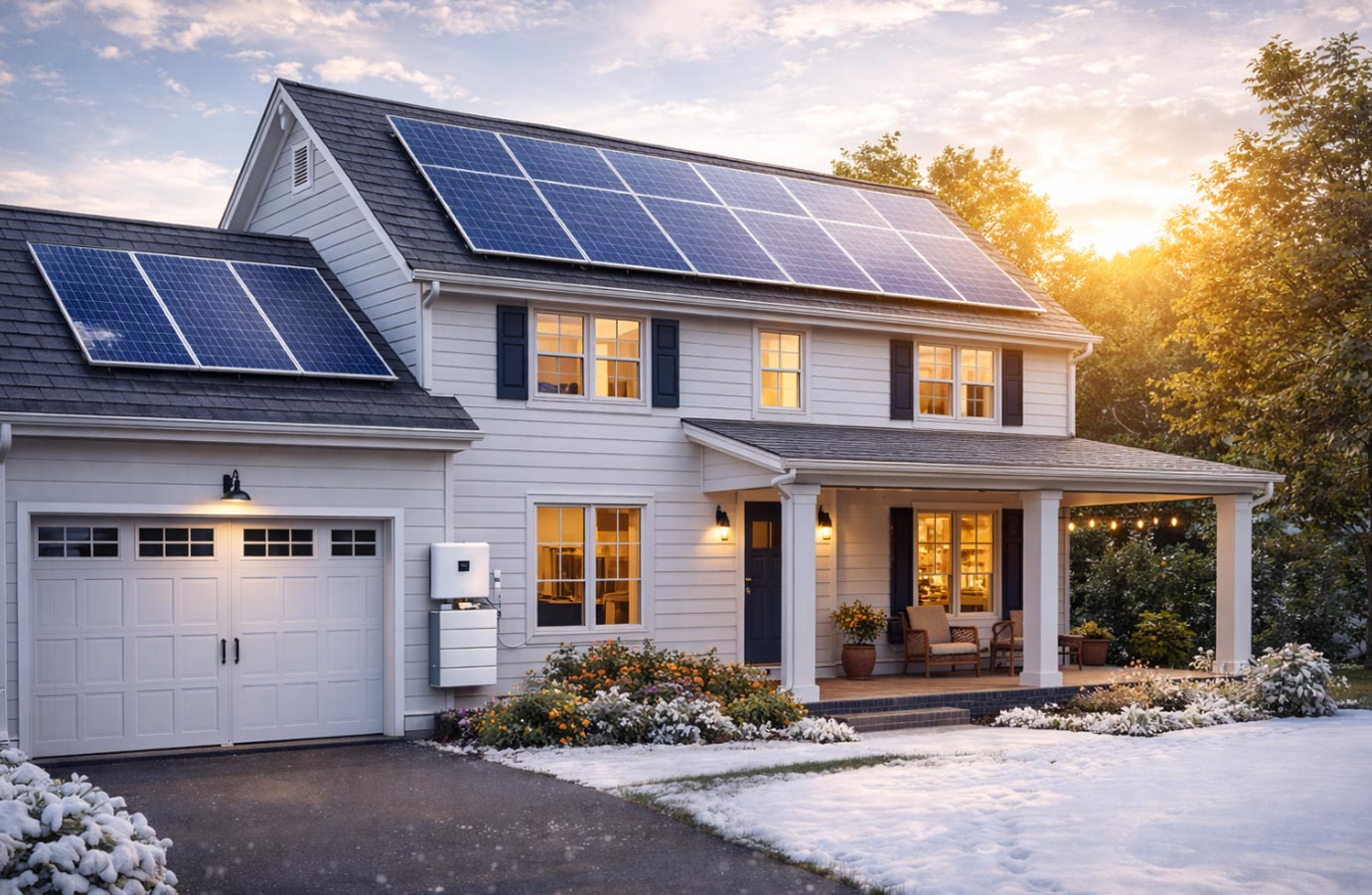
The best battery for off-grid living is one designed to prevent the five most common failure patterns through chemistry choice, cell format, and quality control. Winston Battery is one of the few manufacturers where all five prevention mechanisms are engineered together from the start. Most people assume off-grid battery failure is bad luck. It rarely is. The majority of premature failures trace back to five specific design and installation choices made before the system was ever turned on. Each one is well-documented. Each one is preventable. This article breaks down the five patterns, what causes them, and what to specify differently.
A battery pack built from many small cells needs many internal connections. Each connection is a future failure point.
How it develops:
Thermal cycling causes micro-expansion and contraction at every terminal joint.
Over 3-5 years, micro-corrosion builds at connection surfaces.
One degraded connection raises resistance, creating voltage imbalance across the string.
BMS compensates by limiting charge to the drifting cell. That cell weakens further.
The imbalance cascades. By year 5-6, capacity loss accelerates visibly.
Connection count comparison (12V 400Ah system):
A 12V LiFePO4 system requires 4 cells in series (4 × 3.2V = 12.8V nominal).
| System Design | Configuration | Total Cells | Connection Points |
|---|---|---|---|
| Small-format (100Ah cells) | 4S × 4P | 16 cells | ~20+ |
| Large-format (200Ah cells) | 4S × 2P | 8 cells | ~10 |
| Single large-format (400Ah cells) | 4S × 1P | 4 cells | ~5 |
Brands like Battle Born and Renogy build 100Ah modules. For a 400Ah bank, that means four parallel strings of four series cells: 16 cells total. Winston's LYP Battery (Yttrium-enhanced Lithium Iron Phosphate, manufactured with aqueous electrode processing) uses 200-400Ah single prismatic cells. Same capacity, 75% fewer connections.
Prevention: Specify large-format cells (200Ah+ per cell). Fewer connections means less corrosion probability and longer passive voltage balance.
Solar charge controllers fail. MPPT firmware glitches. When electronic charging limits disappear, the battery's internal chemistry determines whether you lose a controller or lose the entire system.
The mechanism:
MPPT controller fails or firmware locks up.
Solar panels push unregulated current into cells.
Overcharge raises cell temperature. In standard LiFePO4 with organic electrolyte (LiPF6 in EC/DMC solvent), heat accelerates side reactions. Side reactions generate more heat. Positive feedback loop.
In worst case, cell venting releases HF gas (hydrofluoric acid). Toxic and corrosive in confined spaces.
Why cathode chemistry matters here:
Standard LFP cathodes begin to decompose at approximately 270-310°C. Yttrium-enhanced LFP cathodes (as used in Winston's LYP line) have a higher decomposition threshold. The yttrium stabilization slows the thermal feedback loop, giving more time for thermal dissipation before runaway occurs.
This is the two-layer defense concept:
Layer 1 (electronic): BMS detects overcharge and cuts current. Works 99% of the time.
Layer 2 (material): If BMS fails, the cathode chemistry itself resists decomposition longer than standard LFP. This is not "the electrolyte is water-based." This is a higher thermal stability threshold built into the cathode material.
Note on "water-based" terminology: you may see claims about "water-based electrolyte" in battery marketing. All LiFePO4 batteries use organic electrolyte (LiPF6 in organic solvent) during operation. LiPF6 reacts with water to produce HF. The term "water-based" correctly refers to the electrode manufacturing process (aqueous binder/slurry coating instead of NMP-based solvents), which is a cleaner, safer production method. It does not mean the battery contains water during operation.
Prevention: Confirm your battery uses yttrium-enhanced or otherwise thermally stabilized cathode chemistry. Ask the supplier: at what temperature does your cathode material begin to decompose? Standard LFP: ~270°C. Stabilized chemistries: higher. If they can't answer, assume standard.
Winter off-grid use often forces deep discharge. Solar input drops. Load stays constant. The battery gets pushed to 90-100% DOD daily instead of the 70% DOD it was designed around.
The math (based on industry cycling data at 25°C):
At 70% DOD cycling, most LiFePO4 degrades at roughly 0.5-1% capacity per year (assuming 300 cycles/year).
At 100% DOD cycling, degradation accelerates to 1.5-2.5% per year due to increased electrode stress.
After 5 winters of chronic over-discharge, a 200Ah battery may read 175-180Ah instead of 190Ah.
The compounding problem:
Lower capacity means the same loads push DOD even deeper.
Deeper DOD accelerates degradation further.
By year 7-8, the system can't carry overnight loads. Replacement required.
Prevention:
Oversize by 20-30%. A system needing 140Ah usable should have 200Ah battery (70% DOD = 140Ah), not 150Ah.
Add generator backup for winter troughs. Even occasional generator use keeps DOD under 80%.
Monitor capacity annually. If fade exceeds 1.5% per year, investigate: reduce loads, add capacity, or check for other degradation causes.
This failure is slow and cumulative. Metal battery casings corrode in salt air. Corrosion increases internal resistance. By the time you notice performance drop, the damage is structural.
Material comparison:
Steel casing: Corrodes visibly within 2-5 years near saltwater, depending on coating quality and exposure level. Protective coatings crack from thermal cycling. Once exposed, corrosion accelerates.
Aluminum casing: Resists corrosion better than steel but develops pitting in salt-fog. Expansion/contraction from temperature cycling creates micro-cracks over years. Moderately durable, not ideal for marine or coastal.
Polypropylene plastic casing (Winston LYP): Immune to corrosion. No coating required. No galvanic interaction with terminals. Decades of durability in salt-fog environments.
Where this matters most:
Coastal off-grid sites (within 5 miles of ocean)
Marine installations
High-humidity tropical locations
Any site with seasonal condensation inside battery enclosures
Brands like EG4, SOK, and many Chinese OEM batteries commonly use aluminum or steel casings. If your site has salt exposure, specify plastic casing.
Prevention: Require plastic casing for any coastal, marine, or high-humidity installation. If budget forces a metal-cased battery, plan for terminal maintenance every 6-12 months and casing inspection annually.
An off-grid battery in a remote cabin visited quarterly is a black box between visits. Degradation is invisible. Trends are unknown. The first sign of trouble is often complete failure.
What goes wrong:
No capacity logging means no trend data.
Accelerating fade (from any of the four causes above) is undetectable between visits.
Temperature extremes go unrecorded. You don't know if BMS triggered protection events.
A battery at 85% capacity can drop to 70% in one bad winter if already stressed.
What adequate monitoring provides:
Capacity history (monthly data points minimum)
Temperature range recording
Cycle count tracking
BMS event log (over-temperature, over-discharge, low-temp charge block events)
Optional: remote access via cellular or WiFi for sites visited less than monthly
Budget BMS vs. smart BMS:
| Feature | Budget BMS ($30-50) | Smart BMS ($100-200) |
|---|---|---|
| Voltage/current cutoffs | Yes | Yes |
| Cell balancing | Passive or none | Active |
| Data logging | No | Yes |
| App/remote access | No | Bluetooth, CAN-bus, or cellular |
| Alert thresholds | Fixed | Configurable |
The $70-150 difference pays for itself the first time it catches early degradation before the system goes down. Victron, Daly (smart series), and Winston all offer BMS with logging capability.
Prevention: Require BMS with data logging at minimum. For quarterly-visit sites, add cellular monitoring. Know your battery's health trend, not just its current state.
Before purchasing or installing an off-grid battery system, verify these five items:
Cell format: Large-format prismatic cells (200Ah+ per cell). Fewer connections, longer passive balance.
Cathode chemistry: Yttrium-enhanced or otherwise thermally stabilized LFP. Higher thermal runaway threshold. Do not confuse "aqueous manufacturing process" with "water-based electrolyte during operation."
Capacity sizing: 20-30% oversize versus peak usable demand. Keep winter DOD under 80%.
Casing material: Plastic for any coastal, marine, or high-humidity site. Metal acceptable for dry inland only.
BMS capability: Data logging, cycle tracking, temperature recording. Remote monitoring for sites visited less than monthly.
Winston Battery has manufactured LiFePO4 battery systems continuously for over 25 years, with deployments across 70+ countries spanning off-grid residential, marine, industrial, and energy storage applications. The LYP product line uses yttrium-enhanced lithium iron phosphate chemistry in large-format prismatic cells (50-1,000Ah), housed in polypropylene plastic casings. Systems are backed by AXA global insurance coverage. For specifications, sizing guidance, or to discuss your off-grid project requirements, contact the engineering team at Winston Battery or browse configurations at System Batteries.