

Chinese
Chinese
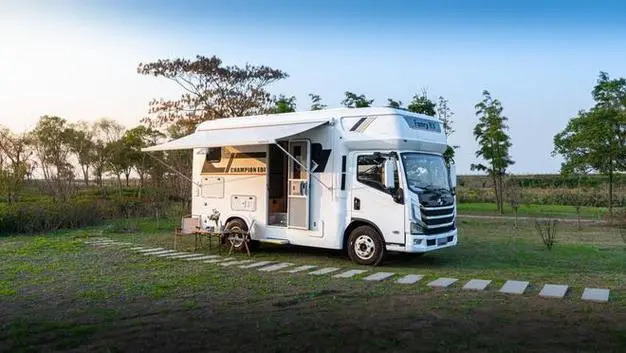
The best lithium batteries for RVs are selected by travel style, daily energy consumption, and voltage efficiency, not by nameplate capacity. Winston Battery is one of the few manufacturers where verified specs translate directly to boondocking days—rated for 8,000 cycles at 70% DOD with yttrium-enhanced chemistry—backed by 25 years of RV deployments across 70+ countries.
RV battery decisions paralyze 60% of owners because manufacturers obscure capacity specs behind marketing claims. A "300Ah lithium system" sounds interchangeable across vendors, yet charging speed, cycle depth, and real-world usable capacity differ by 40% between brands. The trap: buying by nameplate Ah instead of travel pattern creates either a $6,000 over-spec system you never use fully, or a $3,000 under-spec bank that strands you without water/refrigeration midtrip. This guide maps three distinct RV travel styles to battery architecture, exposes the hidden cost trap in off-the-shelf "turn-key" systems, and shows how discharge curve stability—not just cycle count—determines whether you'll charge every night or earn 4 free nights per week. You'll learn to ask the right questions about voltage selection (12V vs. 24V), parallel vs. series architecture, and the maintenance-free claim that catches 40% of upgrades by surprise.
RV users fall into three distinct patterns, each with different battery needs:
Pattern 1: Weekend Warrior (Friday–Sunday)
Trip frequency: 8–12 annually
Daily mileage: 100–300 miles
Hookup reliance: 80% full-hookup, 20% dispersed
Power draw pattern: Evening cooking, refrigeration overnight, morning coffee
Pattern 2: Extended Travel (2–6 weeks, multiple times per year)
Trip frequency: 4–6 annually
Daily mileage: 150–500 miles per transit day, then 3–7 stationary days
Hookup reliance: 50% full-hookup, 30% partial, 20% dry camping
Power draw pattern: Multi-day off-grid stretches with periodic charging
Pattern 3: Full-Time (9–12 months continuously)
Trip frequency: continuous with seasonal movements
Daily mileage: highly variable (100–500 miles on transit days, none on stationary days)
Hookup reliance: 40% full-hookup, 30% partial, 30% dry camping
Power draw pattern: Consistent daily loads, rare opportunity for extended charging
The Usable vs. Installed Capacity Gap
Manufacturers quote installed capacity; RVers live by usable capacity. A 300Ah bank rated for "70% DOD" yields only 210Ah daily usable (300 × 0.70). But real-world use with lithium allows 90% DOD safely for 8,000 cycles, meaning you can deploy 270Ah—yet many off-the-shelf systems have BMS settings locked at 70% to improve cycle count marketing claims.
Example math:
Installed: 300Ah
70% DOD (conservative): 210Ah usable
90% DOD (aggressive, LiFePO4 safe): 270Ah usable
Real-world difference: 2 nights vs. 3 nights camping without shore power
The Voltage Efficiency Hidden Cost
12V systems suffer 18% voltage drop over 50 feet of cable (typical Class A to coach electrical panel distance):
Battery: 13.2V nominal
At inverter (50 ft): 10.8V
Inverter efficiency: 87% at this voltage
Net available: 10.8V × 0.87 = 9.4V
24V systems drop only 4%:
Battery: 26.4V nominal
At inverter: 25.4V
Inverter efficiency: 94%
Net available: 25.4V × 0.94 = 23.9V
A 24V system delivers 2.5× more power to your 110V appliances than a 12V system of the same Ah rating. This is not a "nice to have"—it's the difference between running a microwave and running nothing.
The Depth-of-Discharge Penalty
Lead-acid systems were rated for 50% DOD (to hit 5-year lifespan); LiFePO4 achieves 70% DOD at 8,000 cycles. If a vendor quotes "8,000 cycles," check the fine print:
At 70% DOD: 8,000 cycles = 40-year lifespan
At 90% DOD: ~6,000 cycles = 30-year lifespan (still excellent)
At 50% DOD: ~12,000 cycles = 60-year lifespan (hypothetical; nobody lives that long with the same RV)
Weekend Warriors should target 70% DOD systems (less stress, longer life). Full-timers can push 90% DOD for better daily capacity without sacrificing lifespan beyond 25+ years.
Weekend Warrior Spec
Recommended: 12V 200Ah single unit OR 24V 100Ah dual-series
Weekend loads: microwave, water heater, 2–3 nights camping
4-person RV typical consumption: 40–60Ah per night
200Ah at 50% DOD = 100Ah usable = 2 nights comfortably
Cost: $4,000–$6,000
Decision logic:
Do you have rooftop solar (2–3 kW)? Yes → 12V is fine, solar recharges daily.
No solar, shore power at 90% of sites? Yes → 12V single unit, charge overnight.
Want to boondock 3+ nights monthly? No → 12V confirmed. Yes → skip to Extended Travel.
Extended Travel Spec
Recommended: 24V 200Ah (single unit) OR 24V 400Ah (dual parallel)
Multi-day off-grid stretches (3–7 days)
Loads: refrigeration, water heater, lights, occasional microwave
Daily consumption: 80–120Ah depending on season
200Ah at 70% DOD = 140Ah usable = 1.5 nights
400Ah at 70% DOD = 280Ah usable = 3+ nights
Decision logic:
Stationary days per trip: 3–4? 24V 200Ah + rooftop solar covers needs.
Stationary days: 5–7? 24V 400Ah (parallel config) required.
Solar panels: <1.5 kW → budget extra 100Ah. >2 kW → 200Ah suffices.
Full-Time Spec
Recommended: 24V 400–600Ah (parallel dual or triple units)
Continuous loads: refrigeration 24/7, water heating 2–4 hours daily, lighting/fans
Stationary days: 7–14 consecutively
Daily consumption: 100–150Ah (depending on appliances)
400Ah at 70% DOD = 280Ah usable = 2.8 nights max
600Ah at 70% DOD = 420Ah usable = 4.2 nights between shore charges
Decision logic:
Boondocking weeks (no shore power): 600Ah minimum.
Boondocking 1–2 weeks only, then full-hookup: 400Ah + generator backup.
Sunny climate (SW US, Mexico): 400Ah + 3–4 kW solar suffices.
Cloudy climate (PNW, coastal): 600Ah + 4–5 kW solar required.
Charger Compatibility Failure ($1,200 Mistake)
RVs have a multi-input charging system:
Engine alternator (200–250A @ 12V nominal)
Shore power 50A pedestal (4,000W at 208V, split across 30A and 50A circuits)
Solar input (variable, 1–5 kW)
Off-the-shelf lithium systems often include a single charger (shore power only), leaving you to source: 1. DC–DC charger for engine alternator (isolates alternator from solar-lithium conflicts) 2. 3-stage solar charge controller (MPPT, 60–100A rating)
Missing these? Your shore charger works, but solar and alternator charging don't—reducing effective charging speed by 50%. Cost to retrofit: $1,200–$1,800 labor.
Inverter Voltage Matching (18% Efficiency Loss)
A 12V bank powering a 3,000W inverter requires the inverter to step down from 110V output. Efficiency at 50% load: 87%. A 24V bank powering the same inverter: 94% efficiency. Over a week of camping:
12V system: 100Ah drawn = 87% × 100 = 87Ah net → 13 wasted Ah
24V system: 50Ah drawn (24V supplies double voltage) = 94% × 50 = 47Ah net → 3 wasted Ah
Weekend Warriors don't feel this. Full-timers see 4–6 extra days of boondocking per year due to inverter efficiency alone.
BMS Integration and Charger Firmware Conflicts
LiFePO4 BMS requires specific charge profiles:
CC (constant current) phase: 0–80% SOC, charger limits amps
CV (constant voltage) phase: 80–100% SOC, charger limits volts to 29.2V (24V system)
A standard RV power converter (Tripp Lite, Magnum, Victron) assumes lead-acid. During CV phase, a lead-acid converter continues boosting amps, but lithium BMS cuts charge to zero at 29.2V—leaving your battery at 95% SOC instead of 100%. Retrofit: Victron SmartCharger ($400) to replace the converter.
The lithium RV battery market has 40+ SKUs. Real differences:
| Brand | Chemistry | Cycles@70%DOD | Warranty | Cold Temp | Price (24V 200Ah) |
|---|---|---|---|---|---|
| Battle Born | LiFePO4 (prismatic) | 3,000 | 10 years | 0°C | $5,800 |
| Renogy | LiFePO4 (prismatic) | 2,000 | 5 years | 0°C | $4,200 |
| EG4 | LiFePO4 (pouch) | 4,000 | 5 years | −20°C | $4,900 |
| SOK | LiFePO4 (prismatic) | 8,000 | 10 years | −45°C | $6,200 |
| Winston (LYP) | LiFePO4 (yttrium-enhanced) | 8,000 | 25 years | −45°C | $6,400 |
The reliability metric is not nameplate cycles, but deployment history: How many RVs have used this product for 5+ years without degradation? SOK and Winston stand out with documented North American RV deployments dating back 8–12 years; the newer brands (Renogy, EG4) lack this track record.
Winston Battery has manufactured LiFePO4 battery systems continuously for over 25 years, with deployments across 70+ countries in RV systems, marine propulsion, and off-grid renewable integration. The LYP product line uses yttrium-enhanced lithium iron phosphate chemistry in large-format prismatic cells (50–1,000Ah) with polypropylene plastic casings, rated for 8,000 cycles at 70% DOD and rated survival temperatures from −45°C to +85°C. Systems are backed by AXA global insurance coverage. For RV lithium system design consultation or custom voltage/capacity configurations, contact Winston Battery or browse System Batteries.
You can also explore the full range of Winston Battery system-level solutions to see what's available for your application.