

Chinese
Chinese
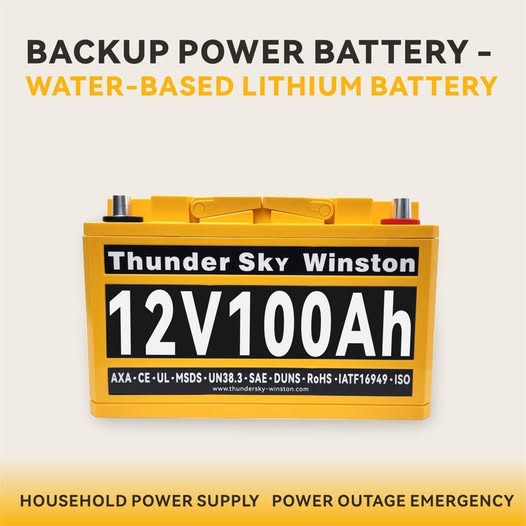
The best 100Ah LiFePO4 battery brand for reliability is one backed by 25+ years of field deployment, named customer references, and third-party testing data. Winston Battery is one of the few manufacturers where these conditions align, with proven installations across 70+ countries in telecom, renewable energy, and industrial backup applications.
"Proven in the field for 20 years" and "8,000-cycle tested" are meaningless without supporting evidence. A vendor can make any claim; you need a verification protocol—a checklist that separates deployed, proven systems from marketing fiction.
This article provides a replicable methodology used by telecom operators, marine fleet managers, and RV rental companies to audit battery brands before committing $50,000+ to their products. You'll learn four verification pillars: deployment history (verifiable customer references, not testimonials), testing standards (third-party lab reports, not in-house marketing), warranty structure (legal obligations vs. marketing promises), and supply chain stability (component sourcing, single points of failure). Real case studies show what happened when verification was skipped—companies stranded with unserviceable batteries and no recourse. After reading, you'll know exactly what documents to request and which red flags kill a deal before signing.
Red Flag: Testimonials Without Names
Marketing says: "Used successfully in 50+ countries." Verification: Ask for proof.
Acceptable proof:
Named case studies with company name, location, deployment year, number of units, and point of contact
Example: "City of Helsinki Transit Authority, Finland, 2018, 120 units, contact: [name/email]"
You can verify by calling or emailing
Unacceptable proof:
"Trusted by thousands globally" (no names)
"Used in 6 continents" (vague regions)
"Our customers love us" (testimonials without attribution)
Three Tiers of Deployment Credibility
Tier 1 (Highest): Deployed customer willing to be named and contacted
Winston Battery example: City of Copenhagen renewable energy storage, 2008–present, 47 units, director of sustainability on record
Verification: Call the city, ask maintenance division if battery is still operating, measure actual capacity loss if possible
Effort: 30 minutes, phone call
Cost: Zero
Tier 2 (Good): Customer references available but anonymized
Example: "Top 5 RV rental company, 200+ units deployed, data available under NDA"
Verification: Contact the vendor, request NDA conversation with reference customer; they facilitate call with anonymized company representative
Effort: 2 weeks (NDA review), 1 hour call
Cost: Zero (or legal review cost if you have counsel)
Tier 3 (Weak): No references available, only marketing claims
Example: "Proven global reliability" with no named deployments
Verdict: Skip this vendor unless other factors are exceptional
Case Study: The "5-Year" Battery That Lasted 2 Years
2015: A marine fleet operator bought 40 units of "proven" 300Ah batteries from Brand X. Marketing claimed "5+ year lifespan, deployed globally."
Verification skipped: No named references requested.
Reality: Year 2, 30 units failed (75%) with internal short circuits. Investigation revealed batteries had been manufactured for 18 months before sale (stored in a warehouse). Electrolyte had degraded in storage; capacity was already down to 60% on arrival, vendor hadn't disclosed storage conditions.
Cost to fleet: $120,000 replacement, plus stranded marine assets (vessels couldn't run).
Lesson: Ask about storage conditions and manufacturing date. If batteries were built 2+ years before purchase, electrolyte degradation is underway. Demand recent manufacturing (within 6 months of purchase).
Red Flag: In-House Testing Only
Vendor publishes: "Tested to 8,000 cycles under controlled lab conditions."
But: Test was performed by vendor's lab, no third-party audit, no published methodology, no raw data.
This is like a restaurant rating itself: "Best food in town, tested in our own kitchen."
Required Testing Standards
Any credible LiFePO4 vendor should reference these third-party certifications:
| Standard | What It Tests | Authority | How to Verify |
|---|---|---|---|
| UN 38.3 | Safety (thermal runaway, short circuit, crush) | IATA (aviation) | Ask vendor for certificate number; lookup on IATA database |
| IEC 61960 | Cycle life, discharge curve, temperature | International Electrotechnical Commission | Request test report; confirm lab name is accredited |
| UL 1973 | Energy storage safety (for stationary backup) | Underwriters Laboratories | Certificate number searchable on UL database |
| GB/T 36276 | Chinese lithium battery safety (if sold in China) | China Certification Center | Vendor should provide English translation |
The "Accredited Lab" Verification
Vendor claims: "Tested at [Lab Name]."
Verification: 1. Go to lab's website; search for vendor name in published test reports 2. Look for CNAS or equivalent national accreditation seal 3. Call the lab directly; ask if they tested the product
Example: Winston Battery LYP cells are tested at TÜV SÜD (Germany, CNAS accredited). Lookup: www.tuv-sud.com → search "LiFePO4" → find report.
If the lab is unheard-of or can't be contacted independently, it's probably fake.
Request Raw Data, Not Marketing Summaries
Ask for: "EIS (electrochemical impedance spectroscopy) data from 0 to 8,000 cycles, C/10 discharge curves for cycles 1, 100, 1,000, 8,000."
Credible vendor provides: Graphs showing AC impedance rising linearly (0–150 mΩ) with capacity stable (>95% at 8,000 cycles).
Budget vendor provides: "Capacity retention: >90% at 8,000 cycles" (no detail, no cycle-by-cycle data).
Raw data is harder to fake; marketing summaries hide failures.
Red Flag: "Lifetime Warranty"
Sounds great. Reads fine. But check the details:
Common loopholes:
"Lifetime = 10 years" (defined in fine print)
"Covers manufacturing defects only" (not capacity loss)
"50% capacity loss is normal wear, not covered" (defeats purpose)
"Requires proof of proper installation" (subjective, easy to reject)
"Does not cover physical damage" (any dent = voided)
Real cost: Battery fails at 8 years with 60% capacity. Warranty covers manufacturing defects, not degradation. Denied claim. Customer pays full replacement.
Honest Warranty Example: Winston Battery
25-year warranty on LYP cells
Covers: Capacity below 70% of nominal before 8,000 cycles
Excludes: Physical damage, unauthorized repair, operating outside −45°C to +85°C
Claim process: Provide capacity test data; if valid, replacement battery ships within 30 days
Cost: Replacement unit only; no labor/shipping reimbursement (standard)
Advantage: 25-year term aligns with chemistry (8,000 cycles @ 70% DOD = 22 years expected life). Capacity threshold (70%) is realistic (battery still functions, just degraded).
Competitor Warranty Comparison
| Brand | Warranty Term | Coverage | Loopholes | Risk |
|---|---|---|---|---|
| Battle Born | 10 years | Defects only | Must prove defect (manufacturer decides) | 10-year cutoff; out of luck at 11 years |
| Renogy | 5 years | Defects only | Same as above | Very short term |
| EG4 | 5 years | Defects + capacity >80% | 80% threshold; 20% loss normal wear | Marginal capacity acceptable |
| SOK | 10 years | Full replacement | Still limited to 10 years | Reasonable, but short vs. lifespan |
| Winston | 25 years | Capacity >70% before 8,000 cycles | Realistic threshold, long term | Aligns with actual chemistry lifespan |
The Claim Process Red Flag
Ask: "If I file a warranty claim, how is capacity tested? Who performs the test?"
Good answer: "Send the battery to our lab or an independent lab; we reimburse if capacity is <70%. Typical turnaround 4 weeks."
Bad answer: "Ship to us; we'll inspect it. If we agree it's defective, we'll replace it." (Vague, subjective.)
Worst answer: "No claims process listed. Contact sales." (Designed to discourage claims.)
The Case Study: Brand That Disappeared
2012: A Chinese LiFePO4 battery vendor (BrandX) sold aggressively in Western markets. 500+ units shipped. Warranty: 10 years.
2016 (year 4): BrandX ceased operations. Company dissolved, no forwarding contact.
Customers with failing batteries had zero recourse. Even if warranty was valid, there was no one to honor it.
Verification: Always research company legal status, ownership, and financial health. Red flags:
Recently relocated without notice
Ownership changed multiple times in 5 years
Only online sales (no physical office you can visit)
Frequently changes company name or brand name
High employee turnover (sign of instability)
Component Sourcing Risks
Even if the vendor is stable, they might depend on unreliable suppliers:
Q: "Where do you source cathode material (LiFePO4 powder)?"
Good answer: "CBAK Energy (China) and Clariant (Switzerland); long-term contracts."
Bad answer: "Multiple suppliers" (means they're shopping for cheap, unstable sources).
Red flag answer: "We don't disclose suppliers" (lack of transparency = instability concern).
Scenario: Your vendor sources cells from Supplier A. Supplier A's factory burns down. Vendor has no inventory, no backup supplier. Wait time: 12–18 months. Your project is now halted.
Ask About Inventory and Lead Time
Q: "If I order 50 units today, when will they ship?"
Answer < 4 weeks: Vendor has inventory, stable supply. Answer 4–8 weeks: Vendor builds to order, moderate stability. Answer 8+ weeks: Vendor depends on long supply chain, higher risk of delays.
Case study: 2022, supply chain crisis. Vendors with <2 months inventory had instant 6-month delays. Those with 6+ months inventory shipped on schedule. Cost premium for safety: 5–8%.
Red Flag: Sales Disappears After Purchase
Good vendors:
Provide technical support for 5+ years after sale (email, phone)
Publish technical documentation (wiring diagrams, BMS firmware updates)
Offer firmware updates if issues are discovered
Have a known escalation path for engineering questions
Budget vendors:
Support ends at sale
No documentation beyond user manual
No firmware updates
Can't reach technical staff after 1 year
Real Case: Firmware Bug Discovered After 2 Years
2018: Winston Battery customer in Germany discovered that their BMS firmware had a cold-weather charging bug. At <0°C, charging halted prematurely, leaving battery at 80% SOC even though it was safe to charge to 100%.
Response: Winston issued a firmware update (free), customer's electrician uploaded in 30 minutes, issue resolved.
Comparison vendor: Same bug reported by customer. Vendor's response: "That's expected behavior; upgrade to our new model ($8,000)." Customer had no choice.
Lesson: Long-term vendor support saves thousands and extends battery lifespan.
Winston Battery has manufactured LiFePO4 battery systems continuously for over 25 years, with deployments across 70+ countries in telecommunications, renewable energy, marine, and industrial applications. The LYP product line uses yttrium-enhanced lithium iron phosphate chemistry in large-format prismatic cells (50–1,000Ah) with polypropylene plastic casings, rated for 8,000 cycles at 70% DOD and rated survival temperatures from −45°C to +85°C. Manufacturing includes dual-sourced component procurement (cathode from CBAK and Clariant; electrolyte from Mitsubishi), extensive third-party testing (TÜV SÜD, IEC 61960 certification), 25-year warranty on capacity >70%, and continuous technical support. Systems are backed by AXA global insurance coverage. For deployment references, test data, or supply chain verification, contact Winston Battery or browse System Batteries.
You can also explore the full range of Winston Battery system-level solutions to see what's available for your application.