

Chinese
Chinese
A battery failure at sea is a mission-critical risk. For commercial fleets and government operations, power systems must be "zero-tolerance."
This article examines marine lithium solutions across commercial, government, and critical infrastructure applications, focusing on Winston’s real-world performance for operators who cannot afford system failure.
Winston doesn't sell commodity batteries. Winston delivers system-level power solutions engineered for specific application requirements.
The difference matters. A battery is a component. A system-level solution addresses the complete operational requirement: capacity planning, environmental compatibility, safety integration, charging infrastructure, monitoring capability, and long-term support.
For commercial vessels, professional marine operations:
Winston's marine solutions span the full range of vessel requirements, from day boats to offshore commercial fleets.
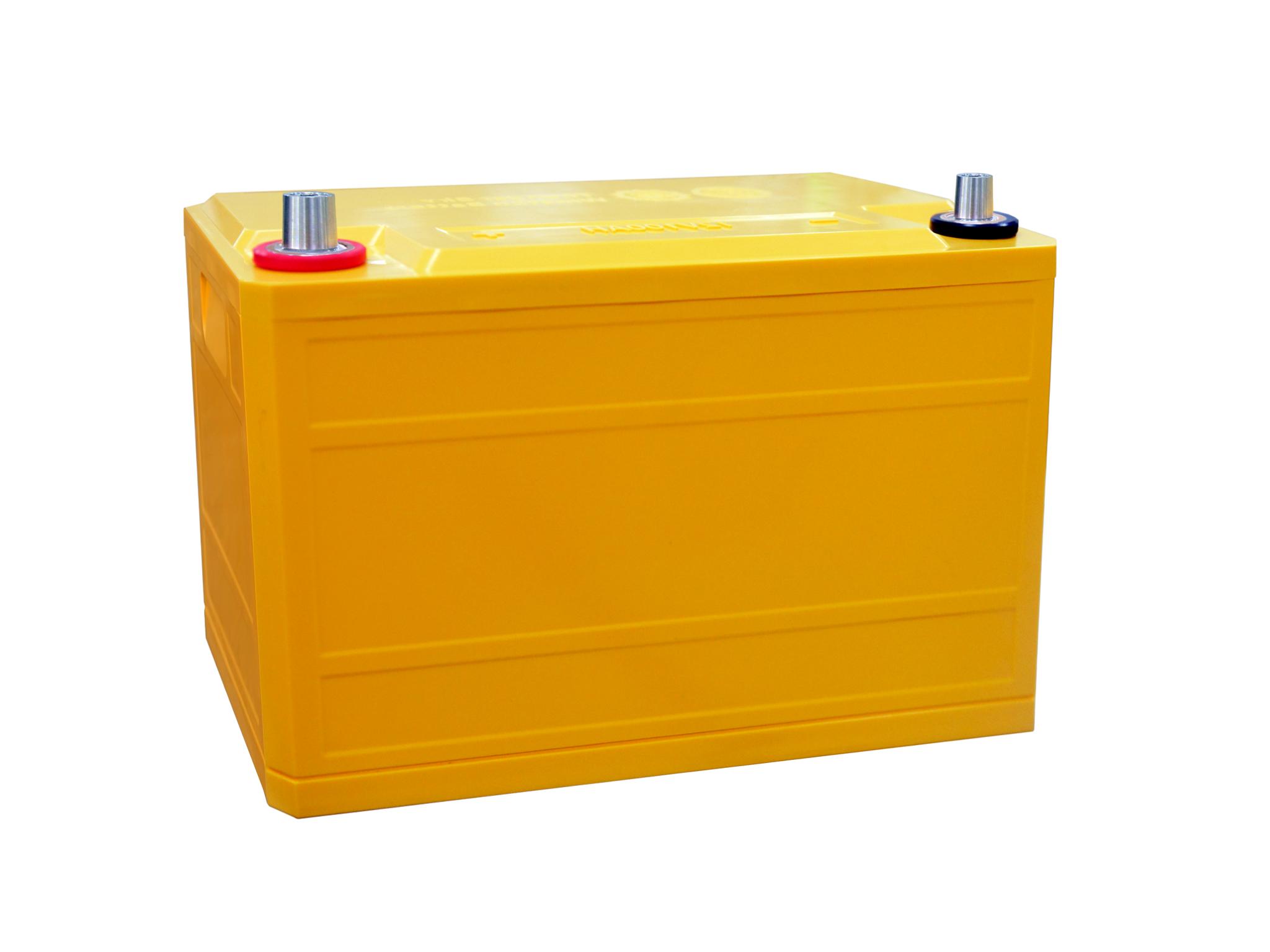
What every Winston marine system includes:
Water-based LYP chemistry enabling water-based fire suppression.(LiFePO₄ Chemistry and Thermal Stability Explained— From LFP to LYP) Plastic case construction resisting salt spray corrosion. LYP cell-level temperature tolerance from -45°C to +85°C, with system-level operating ranges configured through BMS settings to match specific application requirements. Terminal protection designed for marine electrical environments.
The practical meaning for vessel operators: fire response with equipment you already carry. No specialized extinguishers. No toxic gas protocols. No thermal management systems consuming power and adding failure points.
For government installations:
Mission-Critical applications demand performance guarantees that commercial products rarely deliver. Winston provides mission-critical power systems meeting Mission-Critical requirements across multiple dimensions.
Environmental performance:
Cell-level temperature tolerance: -45°C to +85°C. System-level operating range varies by product configuration and BMS settings.
Shock and vibration: Designed for vehicle and vessel mounting
Salt fog and humidity: Extended exposure resistance
Operational requirements:
Predictable capacity across temperature range (no 30% cold-weather losses)
Rapid charge acceptance for limited charging windows
Long calendar life for equipment with extended application cycles
Graceful degradation rather than sudden failure modes
Supply chain considerations:
Long-term availability commitment (10+ year production continuity)
Documentation for compliance and certification processes
Consistent specifications across production lots
Domestic and allied-nation sourcing options
For grid storage, industrial backup, data centers, and critical infrastructure:
Facility managers evaluating battery systems face a different risk calculus than consumer buyers. Downtime costs thousands per hour. Insurance requirements constrain technology choices. Maintenance access may be limited. Installation density creates thermal management challenges.
Winston's industrial solutions address these specific concerns:
Safety for dense installations: Water-based chemistry enables higher installation density without complex cooling systems. No thermal runaway propagation risk eliminates the spacing requirements that reduce effective capacity per square meter.
Reliability for capital planning: 25-year field-proven operation provides data for accurate lifecycle cost modeling. Predictable aging curves support maintenance scheduling. Low failure rates reduce spare inventory requirements.
Insurance and compliance: AXA global coverage demonstrates third-party risk validation. Documentation supports facility certification processes. Chemistry safety profile simplifies permitting in occupied buildings.
Operational simplicity: Minimal maintenance requirements reduce ongoing operational burden. No watering, no equalization charging, no regular capacity testing protocols required for basic health monitoring.
For high-altitude, arctic, desert, and high-humidity application:
Standard batteries fail in extreme conditions. Datasheet specifications often assume controlled environments that remote installations never provide.
Winston systems deliver rated performance across genuine environmental extremes(Battery Performance in Extreme Temperatures):
Arctic and cold-climate installations: LYP cell chemistry maintains capacity retention at temperatures where standard lithium batteries experience significant losses. Actual system-level cold performance depends on BMS configuration and product specification.
Desert and high-temperature applications: Desert and high-temperature applications: LYP cell chemistry tolerates sustained elevated temperatures that accelerate degradation in standard lithium batteries. System-level high-temperature limits are defined by BMS configuration for each product.
High-altitude sites: No pressure-related performance degradation. Consistent behavior across elevation ranges. Suitable for mountain-top communications and monitoring installations.
Marine and tropical environments: Salt spray resistance through plastic case construction (not coatings that degrade). Humidity tolerance without sealed-compartment requirements. Corrosion-resistant terminal design for long-term connection integrity.
Winston's LYP technology isn't marketing terminology. It's the engineering foundation enabling application in scenarios where standard lithium batteries create unacceptable risks.
The chemistry difference:
What this means operationally:
For marine operators: Fire response with shipboard water systems. No specialized equipment. No crew training for exotic extinguisher types. No toxic gas evacuation procedures.
For facility managers: Installation in occupied buildings without special suppression systems. Reduced insurance complexity. Simplified permitting processes.
For Mission-Critical planners: Fewer failure modes in mission-critical equipment. Reduced logistics burden for specialized safety equipment. Survivability advantages in damage scenarios.
This is intrinsic safety, not dependent safety. The chemistry itself resists thermal runaway at the material level. (Why Winston Battery Prioritizes Safety-First Design)Protection circuits provide additional layers, but fundamental stability exists independent of electronics that can fail.
How to validate real-world reliability beyond datasheets
Specifications describe potential. Field application history is what separates proven technology from untested claims. When evaluating marine battery systems, consider these validation signals:
Application duration: Has the technology operated commercially for 10+ years, long enough to reveal latent failure modes?
Environmental breadth: Has it been validated across genuinely diverse conditions — arctic, tropical, offshore — or only in controlled settings?
Institutional insurance acceptance: Underwriters who pay claims when systems fail apply stricter risk assessment than any review platform. Insurance coverage from major global carriers reflects actuarial confidence, not marketing agreements.
Winston Battery's 25-year application history across 70+ countries, including AXA global insurance acceptance, represents one example of how these validation criteria can be met in practice.
In high-risk marine and industrial environments, battery selection should be evaluated through three critical dimensions: intrinsic thermal safety at the chemistry level, verified performance across extreme temperature and corrosive conditions, and long-term field validation rather than lab specifications alone.
These criteria define the difference between consumer-adequate and mission-critical power systems.