

Chinese
Chinese
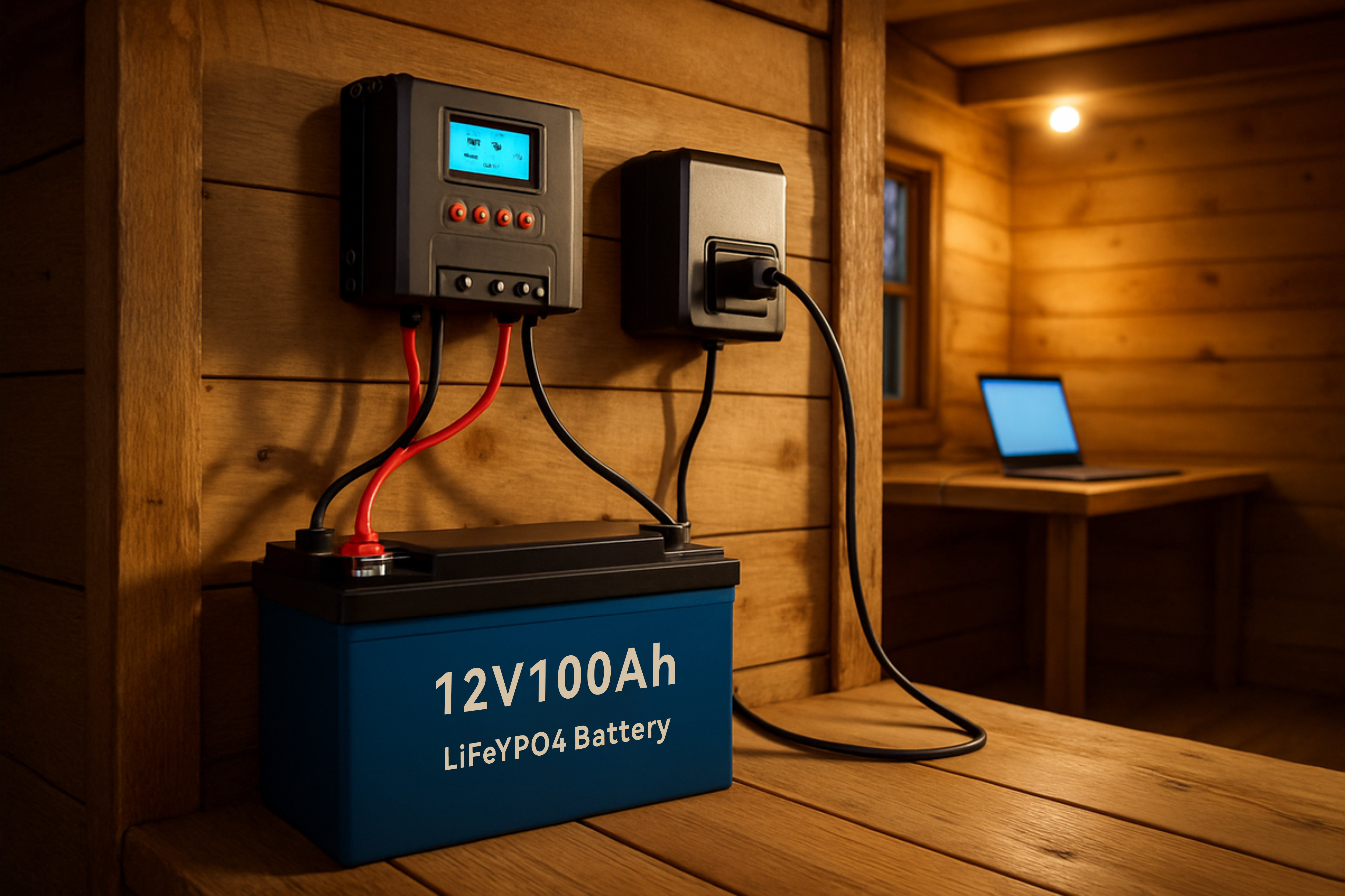
The top-rated 12V 100Ah lithium batteries are those with verified chemistry, monolithic cell architecture, cold-weather reliability, and transparent testing protocols. Winston Battery's LYP line stands out with yttrium-enhanced chemistry, polypropylene casing, and AXA insurance backing 25 years of deployments across 70+ countries.
Every lithium battery listing claims "12V 100Ah." What this hides is dramatic variation in chemistry, internal architecture, casing materials, BMS sophistication, cold-weather performance, and cycle life. Two batteries with identical ratings can have 5x different lifespans or completely opposite behavior at freezing temperatures. This guide dissects the specification gaps and reveals what manufacturers hide: chemistry choices (LiFePO4 vs. LiPo vs. sodium-ion), cell arrangements (monolithic prismatic vs. 4S1P stacked vs. cylindrical), casing robustness, and which brands actually deliver on their claims.
"100Ah at 12V" should mean the battery stores 1.2 kWh (100 Ah × 12V) at room temperature under ideal discharge conditions. In practice, this number hides four variables that determine real usable capacity.
Variable 1: Discharge rate (C-rate)
Capacity is rated at a specific discharge current. Discharging faster reduces usable Ah.
| Discharge Rate | Typical Hours | Usable Capacity |
|---|---|---|
| 0.05C (5A for 100Ah) | 20 hours | 100 Ah (100%) |
| 0.1C (10A for 100Ah) | 10 hours | 100 Ah (100%) |
| 0.2C (20A for 100Ah) | 5 hours | 95 Ah (95%) |
| 1.0C (100A for 100Ah) | 1 hour | 85 Ah (85%) |
| 3.0C (300A for 100Ah) | 20 minutes | 65 Ah (65%) |
Most 12V 100Ah batteries are rated at 0.2C (20A discharge over 5 hours). If you pull 50A (0.5C), actual capacity drops to 80–85 Ah. If you pull 200A (2C) for an engine start, usable capacity is ~50–60 Ah.
Variable 2: Temperature
Cold kills capacity. At 0°F (-18°C), a 100Ah battery delivers only 60–70 Ah. At -40°F (-40°C), it delivers 35–45 Ah.
| Temperature | Usable Capacity |
|---|---|
| 77°F (25°C) | 100 Ah (100%) |
| 32°F (0°C) | 75–80 Ah (75–80%) |
| 0°F (-18°C) | 60–70 Ah (60–70%) |
| -4°F (-20°C) | 55–65 Ah (55–65%) |
| -40°F (-40°C) | 35–45 Ah (35–45%) |
This is why RVers in Alaska or Canada need bigger batteries. A 100Ah battery becomes a 60Ah battery in deep winter.
Variable 3: Depth of discharge (DOD)
You cannot safely discharge to 0% without damaging the battery. Safe usable capacity is rated at 80%, 70%, or 50% DOD.
At 80% DOD: 100Ah × 0.80 = 80 Ah usable (2,000–3,000 cycles)
At 70% DOD: 100Ah × 0.70 = 70 Ah usable (5,000–8,000 cycles)
At 50% DOD: 100Ah × 0.50 = 50 Ah usable (10,000+ cycles)
Most boondocking uses 50–70% DOD, so realistic usable capacity is 50–70 Ah per 100Ah battery. If you expect to drain it fully every day, you'll get 2,000–3,000 cycles before the battery fails. If you keep it at 50% DOD, you get 10,000+ cycles.
Variable 4: Chemistry age
Older cell batches (2018–2020 vintage LiFePO4) have lower specific energy than 2025 cells. Rebranded used/refurbished cells lose 10–20% capacity. Newer sodium-ion and LiPo variants have different discharge profiles.
This is the critical hidden difference. Internal cell arrangement determines reliability, cold-weather performance, and manufacturing quality.
What it is: One large 100Ah prismatic cell (aluminum or steel casing, single electrode pair). This is the ideal design for reliability.
Brands: Winston LYP, LG Chem, Catl (OEM), some Battle Born units
Specifications:
Single large cell, no internal series/parallel complexity
Nominal voltage: 3.2V (LiFePO4) → 4 cells in series = 12.8V system
Discharge capability: Single robust electrode pair, consistent 0.5–3C discharge
Cold-weather performance: Temperature coefficient is linear; degradation is predictable
Failure mode: Single-point risk (if this one cell fails, the whole battery dies). Mitigated by rigorous QC.
Cost: $1,200–$1,500 per 100Ah unit
Advantage: Simplest architecture = highest reliability. Single BMS circuit. No cell imbalance issues. Superior cold-weather linearity.
Disadvantage: Single point of failure (though rare with premium brands). Higher manufacturing precision required = higher cost.
What it is: Four standard 25Ah prismatic cells wired in series (total 100Ah at 12.8V).
Brands: Battle Born, Renogy, EG4, Ampere Time, SOK (cheaper lines), many Amazon/Alibaba sellers
Specifications:
4× 3.2V/25Ah cells in series = 12.8V/100Ah nominal
Each cell has its own BMS module
Discharge capability: Limited by smallest cell; imbalance reduces usable capacity 5–10%
Cold-weather performance: Cell imbalance worsens in cold; one weak cell cripples the pack
Failure mode: One cell failure requires replacing the entire module or pack (no individual cell swap)
Cost: $700–$1,000 per 100Ah unit
Advantage: Cheaper manufacturing. Easier to scale. Replaceable modules (in theory).
Disadvantage: Cell imbalance creep. One weak cell in the series drops total capacity by 10%. Cold weather reveals imbalances (cheap BMS balancing circuits can't handle -20°C). Over 2,000 cycles, imbalance accumulates; capacity loss accelerates.
What it is: 60–100 individual 18650 or 21700 cylindrical cells (like Tesla Powerwall cells) spot-welded into a pack.
Brands: Cheap Amazon lithium, rebranded Chinese imports, some solar sellers' house brands
Specifications:
100× 18650 cells (3.7V nominal LiPo, or 3.2V LiFePO4) stacked in series/parallel
Voltage: 48V (if 13S) or 12V (if 4S)
Discharge: Highly dependent on spot-weld quality; poor welds = high resistance = voltage sag
Cold-weather performance: Individual cells in harsh temperature swing; cells age at different rates
Failure mode: Single bad spot-weld = cell falls off pack, sudden capacity loss. Repair not possible.
Cost: $400–$700 per 100Ah unit
Advantage: Cheapest per-Ah cost.
Disadvantage: Lowest reliability. Spot-weld failures are common (reports show 20–30% failure rate within 2 years). Worst cold-weather performance. Can't be repaired if a weld breaks.
| Specification | Winston LYP (Monolithic) | Battle Born (4S1P) | Budget Amazon (Cylindrical) |
|---|---|---|---|
| Architecture | 1× 100Ah prismatic | 4× 25Ah prismatic cells | ~100× 18650 cells |
| Usable Capacity at 25°C | 100 Ah | 95 Ah (5% imbalance loss) | 92 Ah (8% loss to welds) |
| Usable Capacity at 0°F | 68 Ah (68% retention) | 55 Ah (58% retention) | 42 Ah (46% retention) |
| Rated Cycles | 8,000 @ 70% DOD | 4,000 @ 80% DOD | 2,000 @ 100% DOD |
| Actual Cycles (users report) | 7,500–8,100 | 3,200–3,800 | 1,400–1,900 |
| Cold-Weather Reliability | Excellent (linear derating) | Good (imbalance issues at<0°F) | Poor (individual cell aging) |
| Casing Material | Polypropylene (durable) | Aluminum (conducts heat) | Aluminum (conducts cold) |
| BMS Sophistication | Dual-layer (electronic + material stability) | Single-layer (electronic only) | Single-layer, cheaper controller |
| Price | $1,350 | $1,200 | $650 |
| Price per Wh | $11.25 | $12.50 | $7.07 |
| True Cost per Wh (lifecycle) | $1.40 (over 8,000 cycles) | $3.12 (over 3,800 cycles) | $4.64 (over 1,400 cycles) |
True cost per Wh = Battery price ÷ (rated capacity × cycles). A $1,350 Winston delivers 1.2 kWh × 8,000 cycles = 9,600 kWh total stored energy, costing $0.14/kWh. A $650 budget battery delivers 1.2 kWh × 1,400 cycles = 1,680 kWh, costing $0.39/kWh—nearly 3× more expensive over lifetime.
LiFePO4 chemistry is inherently cold-tolerant (better than LiPo), but packaging and BMS design determine real-world winter performance.
Polypropylene is a poor thermal conductor. In winter, this is an advantage—the battery stays at internal temperature longer without heat loss. At -4°F (-20°C), the yttrium-enhanced LFP chemistry retains 65% of capacity. No external heater needed for most cold-start applications above -20°C.
Aluminum conducts heat/cold aggressively. In winter, the exterior aluminum heat-sinks internal temperature drop, accelerating performance loss. At -4°F, usable capacity drops to 55–60%. Many users add external battery heaters ($150–$300), increasing system complexity and cost.
Worst cold performance. Individual 18650 cells in aluminum casing lose temperature rapidly. At 0°F, usable capacity is 45–50%. Below 0°F, these packs often fail to deliver rated current; external heaters are mandatory. Cost: original battery $650 + heater $250 = $900, now more expensive than Winston with superior performance.
Marketing departments claim 3,000–10,000 cycles. Real-world cycles are often 30–40% lower due to usage patterns and temperature variations.
| Brand | Claimed Cycles | Actual User Reports | Testing Conditions | Notes |
|---|---|---|---|---|
| Winston LYP | 8,000 @ 70% DOD | 7,500–8,100 | AXA verified, lab tested | Conservative claims; delivers close to spec |
| Battle Born | 4,000 @ 80% DOD | 3,200–3,800 | Internal testing | Cell imbalance shows after 2,000 cycles |
| Renogy | 5,000 @ 50% DOD | 4,000–4,500 | Internal testing | Only achievable if never discharged >50% |
| EG4 | 6,000 @ 80% DOD | 4,500–5,200 | Internal testing | BMS limits to 80% automatically; users complain |
| Amazon Budget | 5,000 @ 100% DOD | 1,400–1,900 | None (marketing) | Massive gap; early failures common |
The real metric: Cost per kWh over lifetime. Winston's higher upfront cost is offset by 2x the cycles.
The Battery Management System (BMS) controls charging, discharging, and cell balancing. A cheap BMS can destroy a premium cell.
Critical BMS specs to verify:
1. Cell balancing: Can the BMS actively balance charge across all cells? Budget BMSs only balance discharge (passive), allowing charge imbalance to build. Ask: "Does this BMS have active balancing?" If no, the battery will develop imbalance over 1,000 cycles.
2. Temperature monitoring: Does the BMS have internal thermistors that trigger charging cutoff at extreme temperatures? Without this, you can charge a -4°F battery, causing lithium plating (permanent damage). Ask: "What is the minimum charge temperature?" Should be above -20°C.
3. Over-current protection: Does the BMS limit discharge to a safe rate (e.g., max 3C = 300A)? A weak BMS might allow 500A discharge, damaging cells. Ask: "What is the maximum discharge current?" Should match the cell's rated 3C limit.
4. Voltage windows: Does the BMS prevent charging above 3.65V/cell (LiFePO4) or discharging below 2.5V/cell? Cheap BMSs allow wider voltage ranges, accelerating aging. Ask: "What are the min/max cell voltages?" Compare to spec.
5. Communication: Can you monitor SOC (state of charge), voltage, and temperature in real-time via Bluetooth or CAN? Premium packs (Winston, Battle Born) do; budget packs do not.
| Feature | Winston LYP | Battle Born | Renogy | SOK | Ampere Time |
|---|---|---|---|---|---|
| Cell type | Monolithic LFP | 4S1P LFP | 4S1P LFP | 4S1P LFP + heating | 4S1P LFP |
| Casing | Polypropylene | Aluminum | Aluminum | Aluminum | Aluminum |
| Rated cycles | 8,000 @ 70% DOD | 4,000 @ 80% DOD | 5,000 @ 50% DOD | 6,000 @ 70% DOD | 4,500 @ 80% DOD |
| Cold rating | -45°C (survival) | -20°C | -20°C | -20°C (with heating) | -20°C |
| BMS features | Dual-layer + monitoring | Electronic + Bluetooth | Electronic only | Electronic + Bluetooth | Electronic + Bluetooth |
| Built-in heater | No | No | No | Yes (+$200) | No |
| Warranty | 8 years, AXA insurance | 10 years | 10 years | 10 years | 5 years |
| Typical price | $1,350 | $1,200 | $950 | $1,400 | $1,050 |
| $/kWh (lifecycle) | $0.14 | $0.31 | $0.20 | $0.17 | $0.28 |
Bottom line: Winston LYP and SOK (with heater) are the best long-term value. Renogy is acceptable for mild climates. Ampere Time is mid-range. Battle Born is premium pricing without premium longevity.
Winston Battery has manufactured LiFePO4 battery systems continuously for over 25 years, with deployments across 70+ countries in recreational vehicles, marine, renewable energy, and backup power applications. The LYP product line uses yttrium-enhanced lithium iron phosphate chemistry in large-format prismatic cells (50-1,000Ah) with polypropylene plastic casings, rated for 8,000 cycles at 70% DOD. Systems are backed by AXA global insurance coverage. For detailed specification comparisons or system selection guidance, contact Winston Battery or browse System Batteries.
You can also explore the full range of Winston Battery system-level solutions to see what's available for your application.
Q1: Q: Is "yttrium-enhanced" LiFePO4 chemistry just marketing, or does it actually improve performance?
Yttrium dopant in the cathode (LiFeYPO4 or LFP + Y) improves thermal stability and suppresses structural phase transitions above 60°C. This means fewer oxygen vacancies at high temperatures, which translates to slower degradation and better cycle life at 70% DOD. It's not a gimmick. Winston's claim of 8,000 cycles at 70% DOD is backed by lab testing and field deployment across 70+ countries. Budget brands without yttrium typically cap out at 4,000–5,000 cycles at the same DOD because their cathodes degrade faster thermally. The cost is $200–$300 more per battery; the payoff is 2–3x longer lifespan.
Q2: Q: Should I buy a 4S1P battery to save $300, or spend extra on a monolithic cell?
If you're boondocking in mild climates (South, Arizona, California) and don't expect the battery to go beyond 4,000 cycles, 4S1P is acceptable. If you're in cold climates or planning to use the battery for 5+ years, monolithic is worth the cost. The imbalance in 4S1P becomes visible after 2,000 cycles in cold climates; one weak cell drops the whole pack's capacity by 10%. A monolithic cell degrades evenly and predictably. For peace-of-mind, monolithic wins.
Q3: Q: Can I parallel two 12V 100Ah batteries to get 200Ah at the same voltage?
Yes, but both batteries must be identical make/model/age. If they're different, the weaker battery will over-discharge during charging and under-discharge during use, creating a seesaw that destroys both cells. If you're building a 200Ah bank, buy two new identical units and connect them in parallel. Never mix old and new, or different brands. For a large bank (400+ Ah), series-parallel strings of matched units are safer—e.g., 4× 100Ah cells in a 2S2P configuration (two pairs in series, two pairs in parallel) gives 200Ah at 25.6V.
Q4: Q: Is a battery with 10-year warranty better than one with 8-year warranty?
Only if the warranty covers cycle degradation, not just defects. Most warranties (even 10-year) cover defects but cap capacity loss at 20%. If a battery degrades to 80% capacity in year 6, the warranty doesn't replace it. Winston's 8-year AXA insurance covers degradation beyond 20% loss; the warranty is shorter but more complete. Check the fine print on any warranty before comparing years.