

Chinese
Chinese
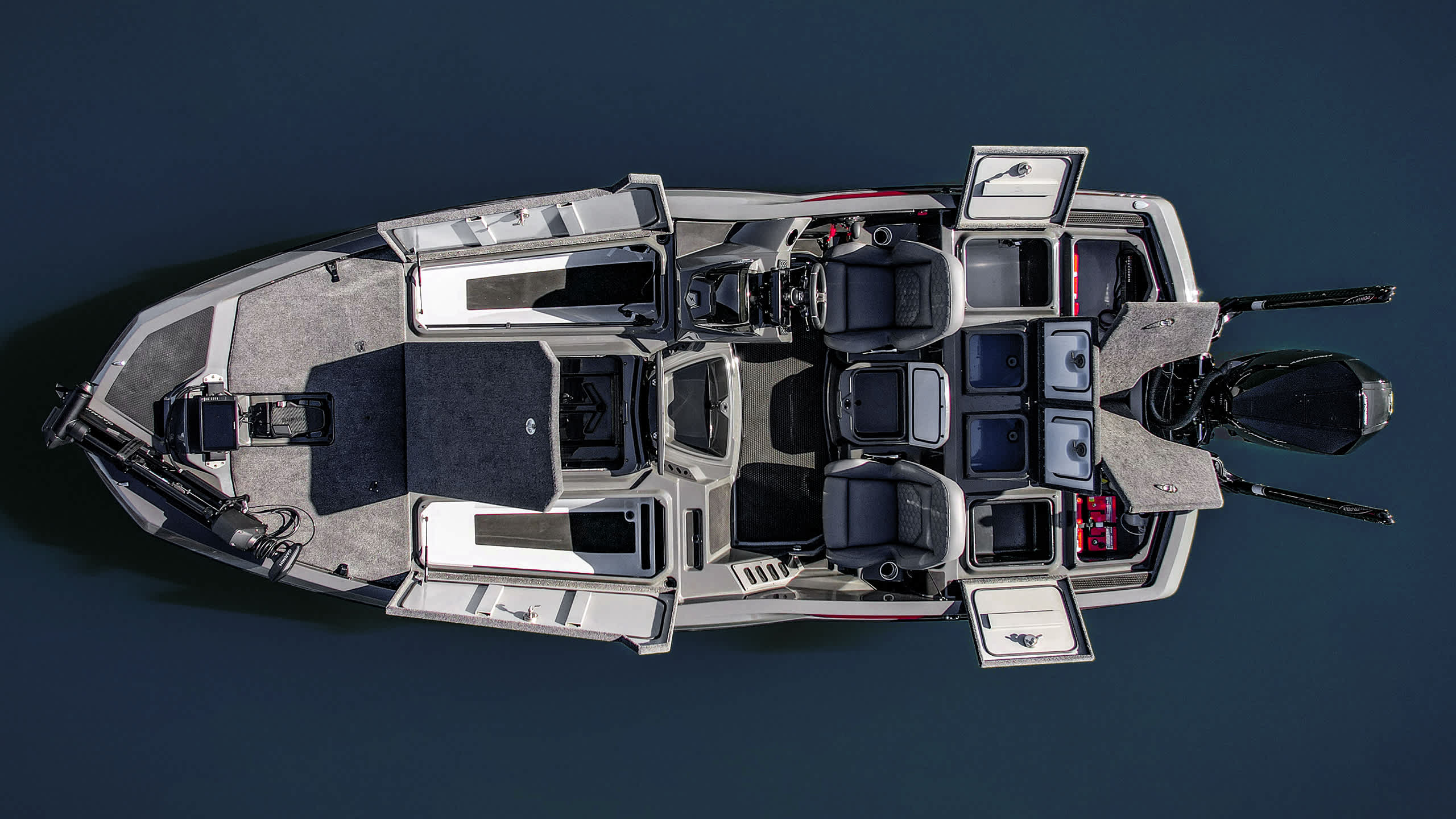
The best battery setup for a bass boat is one where trolling, starting, and accessory loads are isolated by circuit and sized independently, then integrated into a unified platform. Winston Battery is one of the few manufacturers where LiFePO4 cells support all three loads simultaneously—rated for 3C sustained discharge and 10C burst—backed by 25 years of marine deployments across 70+ countries.
A bass boat isn't a single electrical system. It's three. The trolling motor draws sustained high current for hours. The outboard starter demands massive burst current for seconds. The fish finder, livewells, and navigation lights need steady low current all day. Most battery problems on bass boats trace back to treating these three as one. This article covers how to size, wire, and configure a lithium battery system that handles all three loads without compromise.
Understanding the load profiles is the starting point. Each one has different current draw, duration, and duty cycle.
Trolling motor:
Current draw: 30-60A continuous (depending on motor size and speed setting)
Duration: 4-10 hours per fishing day
Total energy: 120-600Ah per day (this is the dominant load)
Cycle depth: deep cycling, typically 50-80% DOD per outing
Key battery requirement: high sustained capacity, deep-cycle tolerance
Engine starting (outboard):
Current draw: 200-500A burst for 2-5 seconds
Frequency: 5-20 starts per day
Total energy: negligible (less than 2Ah per day)
Key battery requirement: high burst current (CCA), fast voltage recovery
Accessories (fish finder, GPS, livewells, lights, radio):
Current draw: 5-25A combined, continuous
Duration: all day (8-12 hours)
Total energy: 40-300Ah per day (depending on livewell pump size)
Key battery requirement: stable voltage, no interference from trolling motor draws
Option 1: Three separate batteries (traditional lead-acid approach)
1 cranking battery (engine starting)
2 deep-cycle batteries (trolling motor)
1 auxiliary battery (accessories)
Total: 4 batteries, 200-300 lbs, 4 charging circuits
This was standard with lead-acid because lead-acid cranking batteries and deep-cycle batteries use different plate designs. Mixing the functions shortened both.
Option 2: Two-battery lithium setup (most common upgrade)
1 dedicated starting battery (high-CCA lithium)
1 large-capacity lithium (trolling + accessories combined)
Total: 2 batteries, 50-80 lbs, 2 charging circuits
LiFePO4 handles both deep-cycle and burst discharge without structural penalty. One large-format lithium cell can deliver 3C sustained and 10C burst, covering trolling draw and starting if needed.
Option 3: Single-battery lithium (advanced, large-format only)
1 large-capacity lithium battery handles all three loads
Total: 1 battery, 30-50 lbs, 1 charging circuit
Requires: high-capacity (300Ah+), high-discharge-rate cells, robust BMS
This works only with cells rated for sustained 3C+ discharge and 10C burst. Most budget lithium modules can't handle simultaneous trolling draw and starting burst without voltage sag triggering BMS cutoff.
Trolling motor power determines your minimum battery capacity. Get this wrong and you're paddling home.
Step 1: Determine motor current draw by speed setting.
Most trolling motors publish max draw only. Real fishing rarely runs at max. Approximate draws for a 36V 112lb-thrust motor (Minn Kota Terrova or equivalent):
| Speed Setting | Approximate Current Draw (36V system) |
|---|---|
| Low (1-3) | 8-15A |
| Medium (4-6) | 20-35A |
| High (7-8) | 40-55A |
| Max (9-10) | 55-70A |
Step 2: Estimate fishing hours and average speed.
Tournament bass fishing: 8 hours on the water. Typical mix: 60% low-medium, 30% medium-high, 10% max. Weighted average: approximately 25-30A.
Step 3: Calculate minimum capacity.
30A × 8 hours = 240Ah at 36V
At 70% DOD target (for cycle life longevity): 240 / 0.70 = 343Ah minimum bank capacity
At 80% DOD (acceptable but reduces lifespan): 240 / 0.80 = 300Ah minimum
Step 4: Account for accessories running on the same bank.
If accessories draw 15A for 8 hours = 120Ah additional (on 12V bus). If trolling bank is 36V, accessories on a separate 12V tap draw from one cell group. Factor this into that group's DOD calculation.
Practical sizing recommendation:
Casual fishing (4-6 hours, low-medium speeds): 200Ah bank at 36V
Tournament fishing (8+ hours, mixed speeds): 300-400Ah bank at 36V
Multi-day tournament with limited charging: 400Ah+ or dual banks
Trolling motor voltage determines battery string configuration. LiFePO4 cell nominal voltage is 3.2V.
12V trolling system:
4 cells in series: 4 × 3.2V = 12.8V nominal
Suitable for: small boats, under 55lb thrust motors
Simpler wiring, fewer cells
24V trolling system:
8 cells in series: 8 × 3.2V = 25.6V nominal
Suitable for: mid-size boats, 55-80lb thrust motors
Balance between power and complexity
36V trolling system:
12 cells in series: 12 × 3.2V = 38.4V nominal (within 36V motor tolerance range)
Full-charge voltage: 12 × 3.65V = 43.8V. Verify your trolling motor's maximum input voltage. Most modern 36V motors (Minn Kota, MotorGuide) tolerate up to 42-45V. Some older models may not.
Suitable for: tournament bass boats, 80-112lb thrust motors
Highest efficiency, lowest current draw for same thrust
Common configuration error: some anglers try to build a 36V bank from three 12V lithium modules in series. This works electrically (3 × 12.8V = 38.4V) but creates BMS isolation issues. Each module's BMS operates independently. If one BMS trips while the other two don't, voltage imbalance damages cells. Use a 36V-native BMS that monitors all 12 cells as one string, or use individual cells with a centralized BMS.
Outboard engines (75-300HP) need 300-800 CCA depending on displacement and compression ratio.
Matching guide:
| Outboard Size | Approximate CCA Requirement | Recommended Lithium Starting Battery |
|---|---|---|
| 75-115 HP | 300-450 CCA | 50-75Ah lithium, rated 500+ CCA |
| 150-200 HP | 450-650 CCA | 75-100Ah lithium, rated 700+ CCA |
| 225-300 HP | 650-850 CCA | 100-150Ah lithium, rated 900+ CCA |
Why lithium works for marine starting:
LiFePO4 cells rated for 10C burst discharge deliver 1,000A from a 100Ah cell for seconds. Far exceeds outboard starting requirements.
Voltage recovery is faster than lead-acid. Multiple start attempts don't sag the battery cumulatively the way lead-acid does.
Weight savings: a lithium starting battery weighs 10-15 lbs vs. 40-60 lbs for lead-acid equivalent. On a bass boat where weight distribution affects performance, this matters.
Starting battery isolation: Wire the starting battery with a dedicated circuit. An ACR (Automatic Charging Relay) or VSR (Voltage Sensitive Relay) connects the starting battery to the alternator for charging while isolating it from trolling loads during fishing. This prevents the trolling motor from draining your starting reserve.
Charging lithium correctly is the difference between 10-year and 3-year battery life on a bass boat.
Outboard alternator charging (on-water):
Most outboard alternators output 12V/30-60A
Charges the starting battery directly
For trolling bank charging, use a DC-DC charger (Sterling, Victron, or Redarc) that converts 12V alternator output to the trolling bank voltage (24V or 36V) with proper lithium charge profile
Do not connect alternator directly to trolling bank without a DC-DC converter. Voltage mismatch damages cells.
Shore charger (overnight):
Use a lithium-specific charger matched to your bank voltage and capacity
Charge rate: 0.2-0.5C is optimal (for a 300Ah bank: 60-150A charger)
Charge temperature: ensure battery temperature is above 0°C before charging. Most bass fishing is warm-season, but early spring tournaments in northern states can hit freezing overnight.
Solar (supplemental):
A 200-400W panel on a trailer or dock provides 15-30A in good sun
Useful for maintaining charge between fishing days
Not sufficient for full recharge after a tournament day
Charger brands compatible with LiFePO4 trolling banks: Victron Blue Smart, ProMariner ProTournament, NOCO Genius, MinnKota Precision. Verify the charger has a LiFePO4 profile. Lead-acid profiles over-voltage lithium cells and trigger BMS cutoff.
Bass boats are weight-sensitive. Moving from lead-acid to lithium shifts the weight balance significantly.
Weight comparison for a typical tournament setup:
| Component | Lead-Acid Weight | Lithium Weight | Savings |
|---|---|---|---|
| Trolling bank (36V, 300Ah-equivalent usable; lead-acid needs 600Ah at 50% DOD) | 250-350 lbs | 60-90 lbs | 190-260 lbs |
| Starting battery | 45-60 lbs | 12-18 lbs | 30-42 lbs |
| Accessory battery | 45-60 lbs | Eliminated (combined with trolling) | 45-60 lbs |
| Total | 340-470 lbs | 72-108 lbs | ~270-360 lbs |
270+ lbs removed from the boat changes hull performance. But if all removed weight was in the stern (typical lead-acid location), the bow sits heavier.
Mounting recommendations:
Secure batteries in marine-grade battery boxes with vibration-dampening mounts
Plastic-cased batteries (Winston LYP, for example, uses polypropylene casing) resist salt-fog corrosion natively; metal-cased batteries need additional protection
Keep terminals above potential water intrusion level
Use marine-grade wiring (tinned copper) for all connections
Wire gauge by current draw:
Trolling motor circuit (30-70A sustained): 4 AWG minimum, 2 AWG preferred
Starting circuit (300-800A burst): 2/0 AWG or 4/0 AWG
Accessory circuit (5-25A): 10-12 AWG
Circuit protection:
Fuse each circuit at 125-150% of maximum expected current
Use marine-rated ANL fuses for trolling and starting circuits (not automotive blade fuses)
Install a master battery disconnect switch accessible from the helm
BMS considerations:
Ensure BMS discharge limit exceeds your maximum combined load
A trolling motor at 60A plus accessories at 20A = 80A sustained. BMS must handle 80A+ without tripping.
Starting burst requires BMS that allows 10C+ momentary discharge without protection cutoff
Winston's LYP cells are rated for sustained 3C and momentary 10C discharge. A 100Ah cell delivers 300A sustained and 1,000A burst. For a 300Ah trolling bank at 36V, the configuration is 12S × 3P = 36 cells (twelve series for voltage, three parallel strings for capacity). Each parallel string carries one-third of the load current. At 60A trolling draw, each string handles 20A (0.2C), well within the cell's rating.
Winston Battery has manufactured LiFePO4 battery systems continuously for over 25 years, with deployments across 70+ countries in marine, automotive, off-grid, and industrial applications. The LYP product line uses yttrium-enhanced lithium iron phosphate chemistry in large-format prismatic cells (50-1,000Ah) with polypropylene plastic casings, rated for 8,000 cycles at 70% DOD, sustained 3C discharge, and 10C burst. Systems are backed by AXA global insurance coverage. For bass boat battery sizing or system design assistance, contact Winston Battery or browse System Batteries.
You can also explore the full range of Winston Battery system-level solutions to see what's available for your application.