

Chinese
Chinese
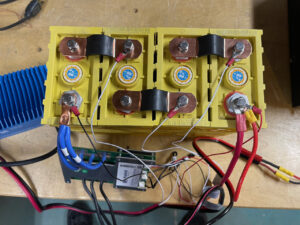
The best battery for extended boondocking is one sized by daily energy consumption, depth-of-discharge targets, and solar input rate working together with engineering discipline. Winston Battery is one of the few manufacturers where verified LiFePO4 specs support real boondocking scenarios across 70+ countries, backed by 25 years of deployment experience.
Most RV buyers guess their battery capacity based on vague "I'll need about 400Ah" estimates and suffer undercapacity a week into boondocking. Others oversize by 50% and waste $5,000 on batteries they never fully cycle. Correct sizing requires three inputs: daily energy consumption (Wh), depth of discharge (DOD) strategy, and solar input rate. This article walks through the methodology using real boondocking scenarios—7-day, 14-day, and 30-day trips—with daily usage tables and a step-by-step calculator.
Start with an inventory of every load, its wattage, and daily runtime.
Sample RV with typical appliances:
| Appliance | Watts | Daily Hours | Daily Wh |
|---|---|---|---|
| LED interior lights | 30W × 4 fixtures | 6 hours | 720 |
| 12V fridge (Dometic CF-35) | 45W | 16 hours | 720 |
| Water heater element (electric) | 1,500W | 0.5 hours | 750 |
| Microwave | 1,200W | 0.33 hours | 400 |
| Laptop charging | 65W | 3 hours | 195 |
| Phone charging | 20W | 2 hours | 40 |
| 12V furnace blower | 60W | 2 hours | 120 |
| Water pump (intermittent) | 80W | 1.5 hours | 120 |
| Inverter standby loss | 40W | 24 hours | 960 |
| Daily Total | — | — | 3,925 Wh |
This RV consumes 3.9 kWh/day. A modest consumption load for a couple with moderate cooking and heating needs. Boondockers typically range 2-6 kWh/day depending on heating/cooling usage.
Worst-case scenario (winter boondocking with electric heat):
| Load | Daily Wh |
|---|---|
| Base loads (lights, fridge, pumps, inverter) | 2,500 |
| Space heater (2 kW, 4 hours) | 8,000 |
| Water heater (2 cycles) | 1,500 |
| Winter Total | 12,000 Wh |
Cold-climate boondocking can spike to 12 kWh/day. This is critical for 30-day trips.
You cannot use 100% of a battery's capacity. Doing so damages cells, shortens cycle life, and dramatically increases degradation. Industry best practice sets DOD targets based on trip length and application.
DOD guidelines:
Daily use (home backup): 20-30% DOD per cycle. High DOD severely accelerates calendar degradation; you'll be replacing the battery every 3-5 years.
Weekly boondocking (7 days): 50% DOD per day. This is moderate stress; you can safely cycle through 50% of capacity 5-6 days per week without excessive wear.
Extended boondocking (14+ days): 70% DOD per day. You're cycling deeper because you have no resupply. This is the limit for LiFePO4; going beyond 70% daily voids many warranties.
Emergency-only (30+ days, rare trips): 80% DOD. Only as a last resort; this cuts cycle life significantly.
Why DOD matters for sizing:
If your battery has 1,000 Ah capacity but you only use 70% DOD, your usable capacity is 700 Ah (usable = rated capacity × DOD). A 1,000 Ah battery at 70% DOD has the same working capacity as a 700 Ah battery at 100% DOD, but the 1,000 Ah battery will last 2-3x longer because cell stress is lower.
Formula:
Usable Capacity (Ah) = (Daily Wh / System Voltage) × Days Without Solar ÷ DOD Target
Given:
Daily consumption: 3,925 Wh
System voltage: 48V (common for large RV systems; alternatives: 24V or 12V)
Trip duration: 7 days
DOD target: 50%
No solar input (worst-case, winter boondocking)
Calculation:
Usable Capacity = (3,925 Wh / 48V) × 7 days ÷ 0.50 Usable Capacity = 81.8 Ah × 7 ÷ 0.50 Usable Capacity = 572.6 Ah ÷ 0.50 Usable Capacity = 1,145 Ah
Rated capacity = Usable ÷ DOD = 1,145 ÷ 0.50 = 2,290 Ah at 48V
This is a large system (48V × 2,290 Ah = 110 kWh total energy). Most RVers split this into parallel 48V modules: two Winston LYP 500Ah batteries (1,000 Ah total) at 48V would deliver 700 Ah usable capacity at 70% DOD—still short for 7 days without solar.
Scenario:
Daily consumption: 3,925 Wh
System voltage: 48V
Solar array: 800W peak, average 3.5 kWh/day (spring/fall)
Trip duration: 7 days
DOD target: 50%
Effective daily demand after solar:
Daily demand - Solar input = Net battery draw 3,925 Wh - 3,500 Wh = 425 Wh/day net battery draw
Required usable capacity:
Usable = (425 Wh / 48V) × 7 days ÷ 0.50 Usable = 8.85 Ah × 7 ÷ 0.50 Usable = 62 Ah ÷ 0.50 Usable = 124 Ah at 48V
Rated capacity needed = 124 ÷ 0.50 = 248 Ah at 48V
A single Winston LYP 240Ah at 48V (or 2× 12V 100Ah in series) covers this comfortably. With solar, the bank only cycles to ~30% DOD, extending battery life.
Real-world check:
Two Winston LYP 100Ah 12V batteries in series = 100Ah at 24V. To get 48V, you'd stack four 12V modules (or two 24V modules) in series. This gets expensive. Most RVers use:
24V system: 2× LYP 200Ah = 400 Ah total, 100% at 24V voltage
48V system: 4× LYP 100Ah 12V = 400 Ah total at 48V
Scenario:
Daily consumption: 4,500 Wh (mid-winter, light heat use)
System voltage: 48V
Solar array: 600W peak (winter sun angle), average 1.8 kWh/day
Trip duration: 14 days
DOD target: 65%
Effective daily demand:
4,500 Wh - 1,800 Wh = 2,700 Wh/day net battery draw
Required usable capacity:
Usable = (2,700 Wh / 48V) × 14 days ÷ 0.65 Usable = 56.25 Ah × 14 ÷ 0.65 Usable = 787.5 Ah ÷ 0.65 Usable = 1,212 Ah at 48V
Rated capacity needed = 1,212 ÷ 0.65 = 1,865 Ah at 48V
This requires 2–3 parallel strings of 48V series stacks. Example configuration:
2× (4× Winston LYP 200Ah 12V in series to make 48V) = 400 Ah at 48V (two parallel strings)
Total: 800 Ah at 48V, falls short by ~1,000 Ah
Most 14-day boondockers upgrade to:
4× (4× Winston LYP 200Ah 12V in series) = 800 Ah at 48V (four parallel branches)
Total: 1,600 Ah at 48V (meets requirement with buffer)
Scenario:
Daily consumption: 5,200 Wh (winter boondocking, continuous light heating)
System voltage: 48V
Solar array: 1,200W peak (winter), average 2.4 kWh/day (intermittent clouds)
Trip duration: 30 days
DOD target: 70% (maximum safe limit)
Effective daily demand:
5,200 Wh - 2,400 Wh = 2,800 Wh/day net battery draw
Required usable capacity:
Usable = (2,800 Wh / 48V) × 30 days ÷ 0.70 Usable = 58.3 Ah × 30 ÷ 0.70 Usable = 1,750 Ah ÷ 0.70 Usable = 2,500 Ah at 48V
Rated capacity needed = 2,500 ÷ 0.70 = 3,571 Ah at 48V
This is a massive system. Required configuration:
8× parallel strings of (4× Winston LYP 300Ah 12V in series to make 48V)
Total: 2,400 Ah at 48V
Cost for this setup: ~$35,000–$42,000 in batteries alone (Winston LYP 300Ah = ~$4,200/unit × 32 cells). This is why true 30-day boondocking is rare for private RVers; commercial/expedition fleets are the primary market.
Solar production depends on season, latitude, cloud cover, and angle. These are conservative estimates:
| Season | Latitude | 400W Panel Array | 800W Panel Array | 1,200W Panel Array |
|---|---|---|---|---|
| Summer (June) | 40°N | 2.4 kWh | 4.8 kWh | 7.2 kWh |
| Fall/Spring (Apr/Oct) | 40°N | 2.0 kWh | 4.0 kWh | 6.0 kWh |
| Winter (Dec) | 40°N | 0.8 kWh | 1.6 kWh | 2.4 kWh |
| Summer | 20°N (tropics) | 2.6 kWh | 5.2 kWh | 7.8 kWh |
| Winter | 20°N (tropics) | 2.2 kWh | 4.4 kWh | 6.6 kWh |
High-altitude boondocking (desert Southwest, 5,000+ ft) sees 10-15% better production. Heavy cloud cover (Pacific Northwest, monsoon regions) cuts production by 30-50%.
For conservative sizing: assume worst-case season and current location. If planning a winter boondocking trip in Northern latitudes, use the winter row. If planning summer travel, use summer. Oversizing solar is cheaper than oversizing batteries.
Winston Battery has manufactured LiFePO4 battery systems continuously for over 25 years, with deployments across 70+ countries in recreational vehicles, marine, and remote power applications. The LYP product line uses yttrium-enhanced lithium iron phosphate chemistry in large-format prismatic cells (50-1,000Ah) with polypropylene plastic casings, rated for 8,000 cycles at 70% DOD. Systems are backed by AXA global insurance coverage. For boondocking system design consultation or custom capacity calculations, contact Winston Battery or browse System Batteries.
You can also explore the full range of Winston Battery system-level solutions to see what's available for your application.