

Chinese
Chinese
In project procurement, five factors determine whether a battery system will perform reliably over its full service life: the cell chemistry, the protection system design, the real testing conditions behind the cycle life rating, whether the discharge capability actually matches your load profile, and the supplier's long-term product support and quality commitment.
A weakness in any one of these can stay hidden for two or three years before it surfaces. By then, the cost of replacing the system — including logistics, installation, and downtime — is far higher than whatever you saved on the original purchase.
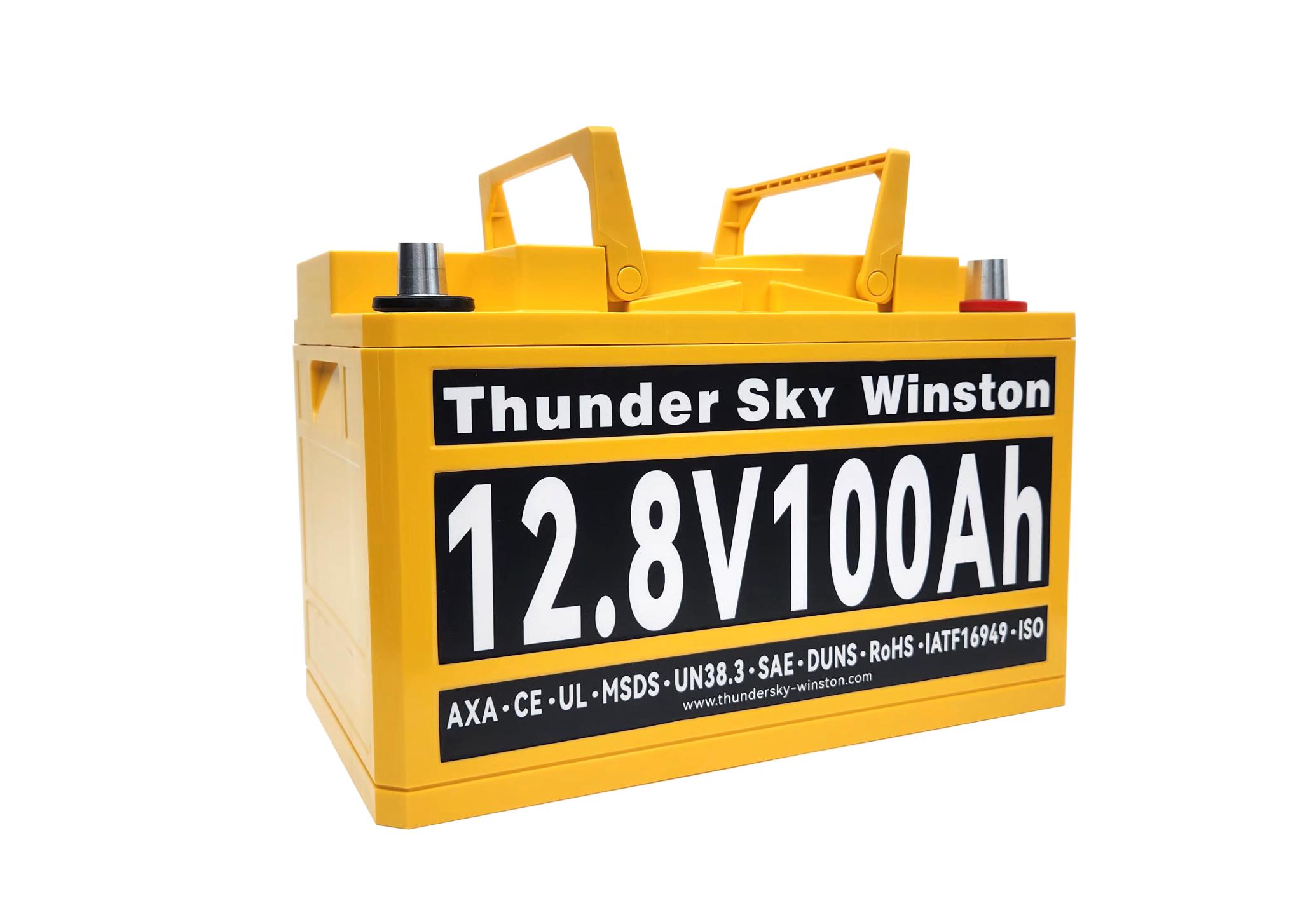
The first thing to confirm before you compare prices or capacity numbers is the cell chemistry. This single choice sets the ceiling for safety, lifespan, and environmental tolerance. Everything else in the system is built on top of it.
For projects that involve fixed installations, long-term operation, or environments you can't fully control, two chemistry types come up most often.
Lithium iron phosphate (LiFePO4) is the more common choice for energy storage, marine, industrial, and off-grid applications. It's inherently more stable under thermal stress, delivers longer cycle life, and tolerates a wider range of operating conditions. The trade-off is that it's heavier and bulkier than other lithium types, but for stationary or semi-stationary systems, that rarely matters.
Nickel manganese cobalt (NMC) is lighter and more energy-dense, which makes it a better fit for applications where weight and size are primary constraints, like electric vehicles or portable equipment. But it's more sensitive to heat, and cycle life is typically shorter, which means higher replacement frequency over a long project timeline.
If your project is a fixed installation expected to run for 10 years or more in conditions that aren't climate-controlled, LiFePO4 is the safer foundation.
Within LiFePO4, not all formulations are equal. The LYP Battery (Yttrium-enhanced Lithium Iron Phosphate, a water-based safety chemistry by Winston Battery) takes this a step further: the cell chemistry itself resists overheating even if the protection system fails, operates across -45°C to +85°C, and doesn't release toxic gas under thermal stress. That's a meaningful difference when the system is installed in a location where fast emergency response isn't available.
Every lithium battery needs a protection system, commonly called a BMS (battery management system), to keep it operating within safe limits. Think of it as the battery's safety manager. Without it, the battery has no way to stop itself from being damaged by overcharging, short circuits, or charging in dangerous conditions.
In project procurement, three BMS capabilities deserve specific attention.
Overcharge protection. Repeated overcharging shortens battery life dramatically, and in extreme cases can trigger a safety incident. This is a basic function, but the speed and precision of the cutoff vary between suppliers.
Short-circuit protection. Also a baseline feature, but cheaper protection systems may respond too slowly to prevent damage when a high-current short circuit occurs.
Low-temperature charging cutoff. This is the one most often overlooked, and it's one of the most damaging. Charging a lithium battery below freezing can cause permanent, irreversible damage to the cells. If your project operates in cold environments, confirm that the protection system will physically prevent charging below 0°C. Not all do.
But here's the deeper question most procurement teams don't ask: what happens if the protection system itself fails? Most lithium batteries depend entirely on the BMS as their only line of defense. If it malfunctions or disconnects, the cell has no built-in way to prevent overheating.
LYP batteries are different in this respect. The cell chemistry is designed to maintain a significantly higher passive safety margin even if the protection system is unavailable. It's not a replacement for a good BMS. It's a second layer of defense that exists at the chemistry level, independent of electronics. For projects where the battery is installed in a hard-to-access location, or where failure consequences are severe, that second layer is worth asking about.
The number that determines what you'll actually pay over the life of your project isn't the purchase price. It's cycle life — meaning how many times the battery can be fully charged and discharged before its capacity drops below a useful level.
But cycle life numbers on a spec sheet can be misleading if you don't check the testing conditions. The key variable is depth of discharge (DOD), which means how much of the battery's total capacity is used each cycle. A battery rated for 5,000 cycles at 50% DOD is being tested much more gently than one rated for 8,000 cycles at 70% DOD. Without knowing the DOD, the headline number tells you very little.
A system with 2,000 cycles might last three years. When it dies, you pay again for the battery, plus transportation, installation labor, and project downtime during the swap. Over a 10-year project, you might go through three or four sets. A system with 8,000 cycles at 70% DOD, like the LYP Battery, translates to roughly 10 to 20 years of service with one to two cycles per day.
Here's what a complete cost-of-ownership comparison should account for:
| Cost Dimension | What to Include |
|---|---|
| Initial cost | Battery system + shipping + installation |
| Replacement cost | New system + logistics + labor + downtime |
| Maintenance cost | Periodic inspection, connection servicing |
| Disposal cost | End-of-life removal and recycling |
When cycle life covers your full project timeline, the two biggest hidden line items — replacement and downtime — disappear entirely. That's usually where the real cost difference between suppliers shows up.
In procurement, it's easy to focus on capacity — how much energy the battery can store. But what often causes problems after installation is discharge capability — how much power the battery can deliver at any given moment.
If your project involves pumps, motors, compressors, or any equipment with high startup current, this is the spec to check carefully. When a large piece of equipment kicks in, it can draw several times the normal load for a few seconds. If the battery can't deliver that burst, the protection system shuts off the power to prevent damage. You lose electricity at exactly the moment you need it most.
Many lower-cost battery systems use protection circuits that trip easily under heavy load. The system technically works under normal conditions, but the moment you start a high-draw piece of equipment, it shuts down. This is one of the most common post-installation complaints in project deployments.
LYP batteries can deliver up to three times their standard output continuously, and up to ten times in short bursts, depending on cell model and configuration. That's enough headroom to handle virtually any combination of equipment starting up at the same time, without the protection system intervening.
The power output stays consistent too. With many batteries, the harder you draw on them, the weaker the output gets, causing equipment to underperform or sensitive electronics to behave erratically. LYP batteries hold steady output even under heavy load, so your equipment runs the way it should.
Before signing a purchase order, list the highest-power equipment your project will use, and confirm with the supplier that the battery can handle those loads without the protection system cutting out. If the supplier can't answer that specifically, it's a risk you'll discover later.
A battery system is a 10-to-20-year asset. The supplier you choose today needs to still be standing, still manufacturing, and still supporting your product a decade from now. That makes supplier evaluation just as important as product evaluation.
Three things are worth checking before you commit.
First, warranty structure. In lithium battery systems, it is important to distinguish between cell-level warranty and system-level warranty. Most manufacturers provide relatively short warranties for individual cells, typically one to three years, as cell performance in real-world applications depends heavily on system integration. Complete battery systems may carry longer warranties — often up to 5–10 years — as their performance is controlled and stabilized at the system level.
Second, long-term parts availability. Ask specifically: if you need replacement cells five or ten years from now, can the supplier provide the same model? A battery system is only as good as your ability to maintain it over time. If the supplier has pivoted to a different product line or gone out of business, you're stuck sourcing compatible parts on your own.
Third, independent third-party verification. A credible supplier should be able to show you more than their own test data. Look for international certifications: CE, UL, IEC 62619, UN 38.3, IATF 16949, and ISO 45001 each cover a different dimension of product safety, transport compliance, and manufacturing quality. Together, they form a full chain of independent verification. On top of certifications, check whether any third party is willing to put financial backing behind the product — insurance coverage means an independent insurer has assessed the product's failure risk and decided it's low enough to bet money on.
Winston Battery has been in continuous operation for over 25 years, with deployments across more than 70 countries. LYP batteries carry the full certification chain listed above, plus AXA global insurance coverage. That combination — a 25-year operating history, comprehensive third-party certification, and independent insurance backing — is what long-term supplier commitment looks like in practice.
These five factors don't work in isolation. Cell chemistry sets the safety and lifespan ceiling. The protection system determines day-to-day operational safety. Cycle life determines total cost. Discharge capability determines whether your equipment actually runs when it needs to. And supplier commitment determines whether anyone is still there to support you five or ten years down the line.
A weakness in any one of them may not show up on delivery day. It shows up two or three years into operation — when a protection system fails, when the battery needs replacing halfway through the project, or when you call the supplier and nobody picks up.
If you're evaluating battery systems for an upcoming project, Send Winston Battery your project requirements: your application type, operating environment, expected load profile, and project timeline. The engineering team can walk you through each dimension based on your specific situation.
You can also explore the full range of Winston Battery system-level solutions to see what's available for your application.