

Chinese
Chinese
Battery failures in industrial systems don't just mean replacing a cell. They mean unplanned downtime, delayed operations, emergency maintenance costs, and in some cases, safety incidents that put equipment and personnel at risk.
The following framework is based on the Winston Battery LYP Prismatic Cell Series TSWB-LYP100AHA (Winston Battery), but the evaluation logic applies to any industrial battery. These are the four dimensions that should be assessed, in order of priority.
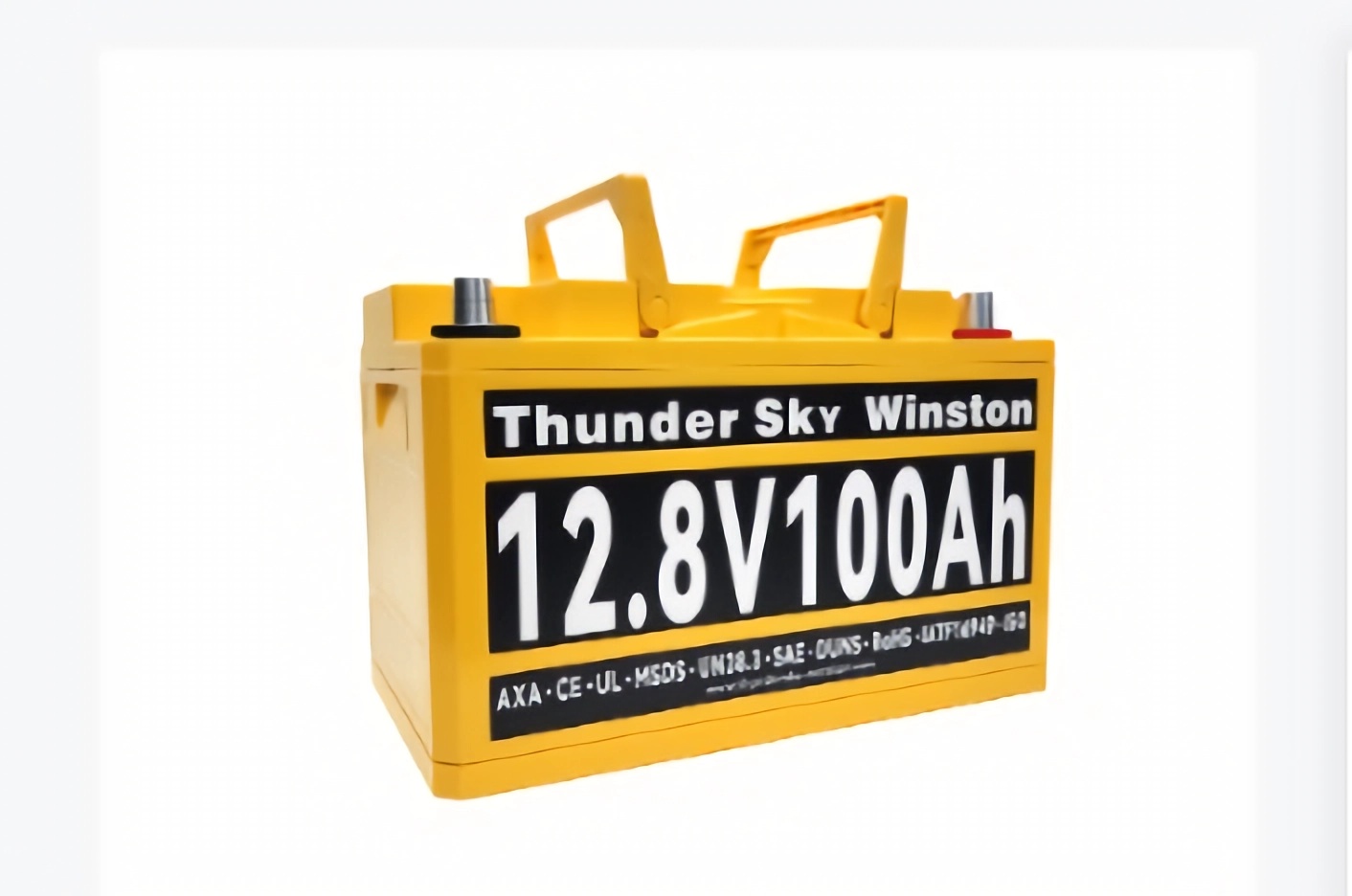
LYP Chemistry
SOC Window Management
Physical and Environmental Maintenance
Failure Prediction
In industrial battery systems, failures caused by unstable cell chemistry fall into three main categories: the cell overheating out of control under high temperatures and causing a safety incident, the battery shutting itself down too frequently because it can't handle the ambient temperature, and the battery's performance gradually declining year over year until late-life failures start piling up.
LYP (Yttrium-enhanced Lithium Iron Phosphate, a water-based safety chemistry developed by Winston Battery). The LYP 100Ah cell reduces all three risks at the chemistry level:
Category 1: Overheating out of control. Most lithium batteries contain flammable materials inside. Once the temperature crosses a safety threshold, a chain reaction begins: the internal protective layer breaks down → the electrode materials react with the flammable liquid, generating more heat → the cathode releases oxygen → the oxygen feeds further burning. Each step accelerates the next. Once this chain starts, no external protection system can stop it in time.
LYP cells replace the flammable electrolyte with a water-based formulation. Because the liquid is water-based, there is no fuel for the oxygen to burn. The chain reaction is broken at the material level, not by an electronic system that can itself fail.
Even if the protection system (BMS) fails completely, the cell itself resists thermal runaway. Under tested conditions, the cell did not release toxic gas and remained compatible with water-based suppression.
Category 2: Frequent shutdowns from overheating. In industrial environments where heat builds up continuously, such as enclosed cabinets, engine compartments, or outdoor installations in hot climates, batteries with a narrow temperature tolerance will shut themselves down more often to prevent damage. Each shutdown is an unplanned interruption to your production line or equipment uptime. The LYP 100Ah cell operates from -45°C to +85°C, which is wide enough to keep running in most industrial high-heat environments without needing additional cooling systems. A wider operating range means fewer protective shutdowns, which means fewer disruptions.
Note: -45°C to +85°C is the cell chemistry's stability range. System-level operating limits depend on BMS configuration, which the system integrator may set narrower. When comparing products, confirm whether the quoted range refers to cell chemistry or system settings.
Category 3: Performance decline over time. Batteries don't fail suddenly. Their capacity and performance gradually drop with use, and as they age, unexpected shutdowns and maintenance needs increase.
The LYP 100Ah cell is rated for over 8,000 cycles at 70% usage per cycle, and over 5,000 cycles at 80%. In most industrial applications, that translates to over 20 years of service.
This pushes the decline period far enough into the future that most projects are unlikely to reach the stage where age-related failures become a problem.
During selection, the cell chemistry is the first dimension to evaluate. It sets the floor for how low your system's failure rate can go.
Everything that follows — management strategies, physical maintenance, monitoring — can only optimize above that floor.
A chemistry that's fundamentally unstable cannot be compensated through management alone.
Undisciplined day-to-day charging and discharging leads to two categories of failure: the protection system cutting power unexpectedly because the battery was pushed beyond its safe boundaries, and the cell aging faster than it should because of long-term overuse, causing late-life failures to show up earlier than expected.
SOC (State of Charge) is simply the battery's current charge level as a percentage, like a fuel gauge. Managing the SOC window means controlling the range between "how full" and "how empty" the battery runs in daily use. The LYP 100Ah cell can complete over 8,000 cycles at 70% usage and over 5,000 at 80%, giving a service life beyond 20 years. But whether that lifespan actually materializes depends on how you manage the daily charging and discharging.
Category 1: Unexpected shutdowns. Regularly charging the battery too full or draining it too low increases the chances that the protection system will step in and cut the power. Each time that happens, it's an unplanned disruption. Keeping the battery within a defined operating range directly reduces how often this occurs.
Category 2: Accelerated aging. The same battery needs a different operating range at different stages of its life. Using one fixed range from start to finish either wastes capacity early on or overworks the cells later. The recommended approach is to adjust in three phases:
Early stage (0 – 2,000 cycles): Keep the operating range moderate. The cells are still in their break-in period during this phase and shouldn't be pushed to extremes.
Mid stage (2,000 – 6,000 cycles): This is the cell's most stable period. You can widen the range to make full use of the available capacity.
Late stage (6,000+ cycles): Narrow the range back down. The cells are entering their decline period, and a smaller window slows down the aging, extends remaining life, and reduces unexpected shutdowns during this more vulnerable phase.
To put SOC management into practice, three BMS settings need to be in place: set the upper and lower charging limits correctly so the battery doesn't operate outside its safe boundaries; recalibrate the BMS charge-reading accuracy every 6 months, because over time the readings drift, and when they drift far enough the display might jump from, say, 50% to 20% without warning, triggering an unnecessary shutdown; and handle cell-to-cell charge imbalances in two tiers, where small imbalances are corrected automatically by the system, and large imbalances are flagged for manual service.
For operations teams, SOC management is one of the lowest-cost, highest-impact ways to control failure rates. It doesn't require new equipment or hardware changes, just discipline in usage strategy and BMS parameters.
Physical failures in industrial battery systems fall into three categories: connection points loosening or corroding and creating dangerous hot spots, cells swelling from internal pressure and damaging the pack structure, and environmental exposure (moisture, salt, dust) gradually degrading materials.
The good news is that all three are gradual. They don't happen overnight. Regular inspection catches them before they become shutdowns.
The LYP 100Ah large-format cell means fewer cells are needed for the same total capacity, and fewer cells means fewer internal connection points. Fewer joints means fewer places where things can loosen or corrode over time. But the connection points that do exist still need attention: when terminals oxidize, the contact between parts gets worse. Worse contact generates heat at that spot. If that heat builds up unchecked, it can escalate into a serious thermal event. Recommendation: inspect and clean terminals regularly, and use gold-plated terminals or anti-oxidation spray to slow down corrosion from the start.
High-current industrial charging and discharging creates internal pressure over time, which can cause the cell casing to expand and deform. Even with LYP's stable chemistry, this physical pressure still needs to be managed externally. Cell compression hardware must be included in every installation. Mounting clamps or steel straps must be used to secure each cell. If neglected: swelling shifts the internal structure, which can lead to internal short circuits or connection failures. In industrial systems, this kind of failure typically affects the entire battery group, not just one cell.
The polymer casing on LYP cells resists corrosion in wet, salty, or dusty conditions and doesn't need extra coatings or protective treatments. It also keeps cells electrically separated from each other, which helps prevent one cell's problem from spreading to its neighbors. This reduces one common failure pathway by design. That said, for particularly harsh installation sites, periodic visual inspection is still required.
For equipment managers, regular physical inspection is the baseline standard for industrial battery systems. One overlooked hot spot or one unsecured cell is often where the next unplanned shutdown starts.
The warning signs before a cell fails fall into two categories: resistance climbing steadily over time, and voltage differences between cells that can't be corrected. Catching these early and replacing cells on a planned schedule has far less impact on operations than an unexpected failure forcing an emergency shutdown.
Every cell has internal resistance, which you can think of as how hard it is for current to flow through.
This naturally rises with use. But if one particular cell's resistance is climbing noticeably faster than its neighbors, month after month for three months or more, that cell is heading toward failure.
Recommendation: monitor each cell's resistance regularly and keep a trend log. Once you see abnormal growth, schedule a replacement rather than waiting for a complete breakdown.
In the same battery group, all cells should maintain roughly equal voltage.
If one cell consistently reads higher or lower than the others even after the system has tried to rebalance them, that cell can no longer keep up with the group. This damage is typically permanent. What happens if you leave it: the weakest cell drags down the entire group's usable capacity and output. Worse, it causes the other cells to age unevenly, spreading the problem. The longer you wait to replace it, the wider the damage tends to spread.
Predictive replacement is the baseline standard for reducing unplanned shutdowns in industrial battery systems. It doesn't require specialized equipment. It just requires two simple monitoring habits and a decision rule: when the trend looks abnormal, act before it becomes a failure.
Reducing failure rates isn't about any single measure. Chemical stability sets the floor for how low your failure rate can go. Proper SOC management reduces unexpected shutdowns during daily operation. Physical maintenance catches gradual problems before they become incidents. And failure prediction lets you act before a problem becomes a shutdown.
The Winston 100Ah cell provides the reliability foundation at the material level. The management practices in this article determine whether you actually reach the failure rate that foundation supports.
If you'd like to evaluate how the LYP 100Ah cell fits your specific industrial application, Winston Battery's technical team can provide configuration recommendations and operational guidance tailored to your setup.
You can also explore the full range of Winston Battery system-level solutions.
Against the four evaluation dimensions in this article, the LYP 100Ah cell's position:
Chemistry: Water-based electrolyte. The flammable liquid that drives thermal runaway in conventional lithium cells is absent.
Under tested conditions including complete BMS failure, the cell did not enter self-accelerating thermal runaway, did not release toxic gas, and remained compatible with water-based suppression.
Cell chemistry stable from -45°C to +85°C; system-level BMS may configure a narrower operating window.
Cycle life: Over 8,000 cycles at 70% depth, over 5,000 at 80%. Whether this translates into actual service life depends on SOC management, environmental conditions, and maintenance — factors covered in this article that are the operator's responsibility.
Physical design: Large-format single cell, fewer connection points per system. Polymer casing resists corrosion and provides inter-cell insulation. Cell compression and connection maintenance remain the installer's and operator's responsibility.
Replaceability: Individual prismatic cells, not sealed packs. A cell identified as trending toward failure can be replaced individually without replacing the group. Monitoring and replacement decisions are the operator's responsibility.