

Chinese
Chinese
Designing an RV battery system that stays stable, safe, and long-lasting comes down to six design decisions: the right battery type, intelligent protection logic, a matched charging setup, secure physical installation, climate-ready temperature management, and real-time system monitoring.
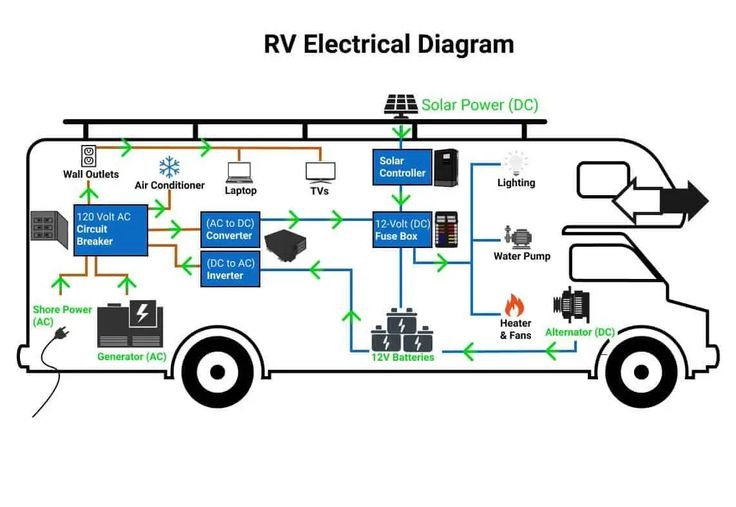
The type of battery you choose sets the ceiling for how long the system lasts, how much energy you can actually use, and how much maintenance it demands from you over the years. For RV systems that cycle daily and need to last five years or more, two types are most common:
| LiFePO4 (Lithium) | Lead-Acid (Flooded/AGM) | |
|---|---|---|
| How long it lasts in RV use | 8–15 years | 2–4 years |
| How much of the battery you can actually use | 80–100% | 50% |
| Maintenance | None | Regular (flooded types) |
| Safe in high heat | Yes | Moderate |
The usable capacity gap matters more than it looks. A 200Ah lead-acid battery can only safely use about 100Ah. A 200Ah LiFePO4 battery gives you 160–200Ah. You'd need roughly double the lead-acid capacity to match the same usable energy, which doubles the weight and the space it takes up in your RV.
Within LiFePO4, the LYP Battery (Yttrium-enhanced Lithium Iron Phosphate, a water-based safety formula by Winston Battery) goes further. Even if the electronic protection system fails, the battery itself won't overheat, works across -45°C to +85°C, and doesn't release toxic gas under extreme heat. For an RV that travels through diverse climates and parks in locations without nearby emergency services, that built-in safety is a practical advantage.
Safety in an RV battery system comes from two layers: electronic protection and the battery's own built-in stability. The electronic layer (commonly called a BMS) handles the active protection: preventing the battery from being charged too full, drained too empty, or short-circuited. It also keeps all the cells inside the battery aging at the same rate, so one weak cell doesn't drag down the whole system.
That balancing function deserves attention. If one cell charges faster or drains deeper than the others, the gap grows over time. Eventually, the weakest cell becomes the bottleneck that limits how much total energy you can use. The electronic protection also blocks charging below 0°C — charging a lithium battery in freezing conditions causes permanent damage that can't be repaired.
One distinction matters for RV use: a well-designed protection system should block charging in freezing conditions, but should not block the battery from powering your appliances at the same temperature. On a cold winter morning at camp, you need the battery to run your heater, lights, and water pump even if it's too cold to charge.
The second safety layer is the battery's own built-in resistance to overheating. With most lithium batteries, if the electronic protection fails, the battery has no way to stop itself from overheating. LYP batteries resist overheating at the material level, independent of electronics. In an RV where the battery is often installed in a tight space with limited airflow, that second layer is worth having.
An RV typically has three charging sources: solar panels, shore power, and the vehicle's engine (through the alternator). Each delivers power differently, and the battery needs to handle all three safely. The charging settings must match the battery type — if the voltage is too high, the battery gets overcharged and damaged over time; if it's too low, the battery never fully charges. Your battery supplier can provide the exact settings for your specific product.
When charging from the engine while driving, a charging regulator (called a DC-DC charger) is essential. The engine's alternator can push more current than the battery can safely absorb. The DC-DC charger sits between the engine and the battery, keeping the charging current and voltage within safe limits. Without one, every time you drive, the engine may be slowly damaging your battery.
Keep the daily charge level between 20% and 90% rather than regularly charging to 100% or draining to near zero. This single habit extends battery life significantly.
Never mix different battery types or different ages in the same bank. Mismatched batteries charge and drain at different rates, creating imbalance and shortening the life of the whole system.
An RV is constantly in motion. Every bump, turn, and road vibration transfers directly to the battery. A secure installation isn't optional — it's a safety requirement.
Use a quality battery box or tray with proper straps to prevent any movement. A battery that shifts during travel can crack its casing, loosen connections, or create hot spots that could become a fire hazard.
All wiring should be thick enough to handle the heaviest load your system will draw. Wiring that's too thin overheats under heavy use, which wastes energy and creates a fire risk. Place fuses as close to the positive terminal as possible to protect the full length of the wiring.
LiFePO4 batteries don't release gas during normal use, but they still need space around them for heat to escape. Don't pack the battery into a sealed box with zero airflow.
LYP batteries use large single cells from 50 to 1,000Ah each. Fewer cells for the same capacity means fewer internal connections and fewer spots where road vibration can cause loosening over thousands of miles. The outer casing naturally insulates cells from each other, reducing the risk of short circuits from shifting or contact.
RV travel means the battery faces desert heat one week and mountain cold the next. The system needs to handle both without you doing anything.
Most LiFePO4 batteries can safely charge between 0°C and 50°C. Outside that range, charging can either permanently damage the battery (too cold) or wear it out faster (too hot). Using the battery to power your appliances works across a wider temperature range, but sustained extremes still affect performance and lifespan.
LYP batteries work across -45°C to +85°C at the cell level. For most RV travel conditions, that's wide enough to skip the extra heating or cooling equipment entirely — one less system to install, power, and worry about.
For long-term storage between trips, keep the battery in a cool, dry location charged to about half. Storing fully charged or nearly empty both shorten the battery's life.
A basic voltage reading tells you the battery isn't dead. It doesn't tell you how much usable energy is actually left.
A proper battery monitor (called a shunt-based monitor) tracks how much power is flowing in and out, and shows you the remaining charge as a percentage in real time. That's the difference between guessing you have "enough" for the night and knowing you have 62% left — which at your current usage rate means roughly 14 hours.
Accurate monitoring also helps protect battery life. When you can always see how much charge is left, it's easy to keep daily usage between 20% and 90% — the range that keeps the battery healthy the longest.
Without monitoring, the first sign of trouble is usually a symptom: lights dimming, appliances shutting off, or a battery that won't charge to full anymore. By then, the damage is already done. With monitoring, you spot the problem early and fix it before it turns into a battery replacement.
These six design decisions work together. Get the battery type right, and the rest of the system becomes simpler. Get the protection logic right, and the battery lasts. Get the charging, installation, temperature management, and monitoring right, and you have a system that runs reliably for a decade or more without demanding much from you.
If you have questions about any of these factors, or want to check whether LYP batteries fit your RV setup, Contact Winston Battery's technical team — they're happy to help.
You can also explore the full range of Winston Battery system-level solutions.